

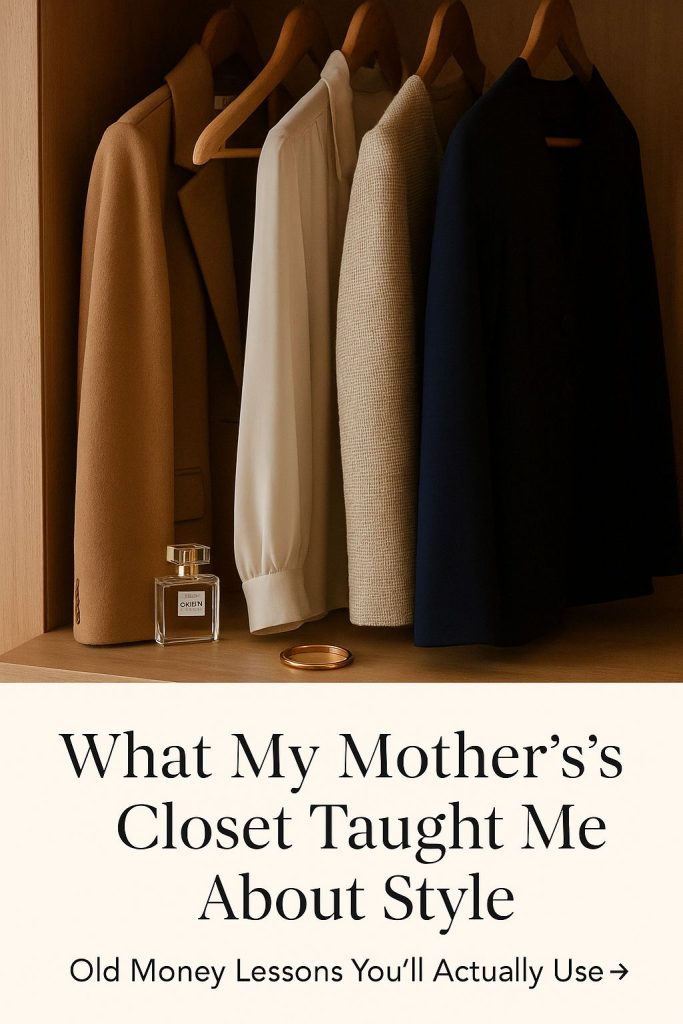
I used to sneak into my mother’s closet when she wasn’t home. Not to try on everything. I wasn’t that daring, but to just… look. It smelled faintly of cedar and Chanel No. 5. No stuffed racks, no tangled hangers. Everything sat where it belonged, with space around it. She didn’t buy a dress for every occasion, just a handful she actually wore and loved. I remember thinking each one seemed to have its own story, like it was picked for something special. That might’ve been the moment I started to get what style really was.
Looking back, I think the real lesson from my mother’s closet wasn’t even about the clothes for some reason. It was how she lived. She hung onto the pieces she actually wore, the same way she held onto the things she truly needed. Without knowing it, I’d picked up one of the best old money style tips I still follow today.
1. Buy less, choose well
My mother didn’t buy clothes every season. In fact, I remember her wearing the same camel wool coat for most of my childhood. She’d have it cleaned and repaired each year, buttons tightened, lining checked. It never looked “old”, just like it belonged to her.
If you want to know how to dress classic, this is it: find a handful of things you truly love, and keep them in shape. Don’t chase every trend that flits across your Instagram feed. That coat will outlive every microtrend. And more importantly, it will start to feel like you.
2. Fit over fashion

One of my earliest memories is her standing in front of the mirror, quietly pinning the waist of a skirt before taking it to the tailor. She always said clothes should “meet you halfway”. They don’t need to fit perfectly right off the hanger, but they should be worth making them perfect.
That’s the difference between a closet that just takes up space and one you actually want to wear. High-waisted trousers, a silk blouse, whatever it is… the fit can change the whole feel. Even something cheap can look like a million bucks once it’s tailored to you.
3. Neutral doesn’t mean boring

Open her closet and it was mostly navy, cream, charcoal, and maybe a deep green here and there. Somehow it never felt dull. She mixed things up with texture: a silky shirt under a rough wool cardigan, soft cashmere with crisp cotton.
One of those quiet old money style tips people forget is that you don’t need wild colors or busy prints to stand out. It’s more about how things work together: the feel, the balance, and knowing what feels like your skin.
4. Accessories as punctuation
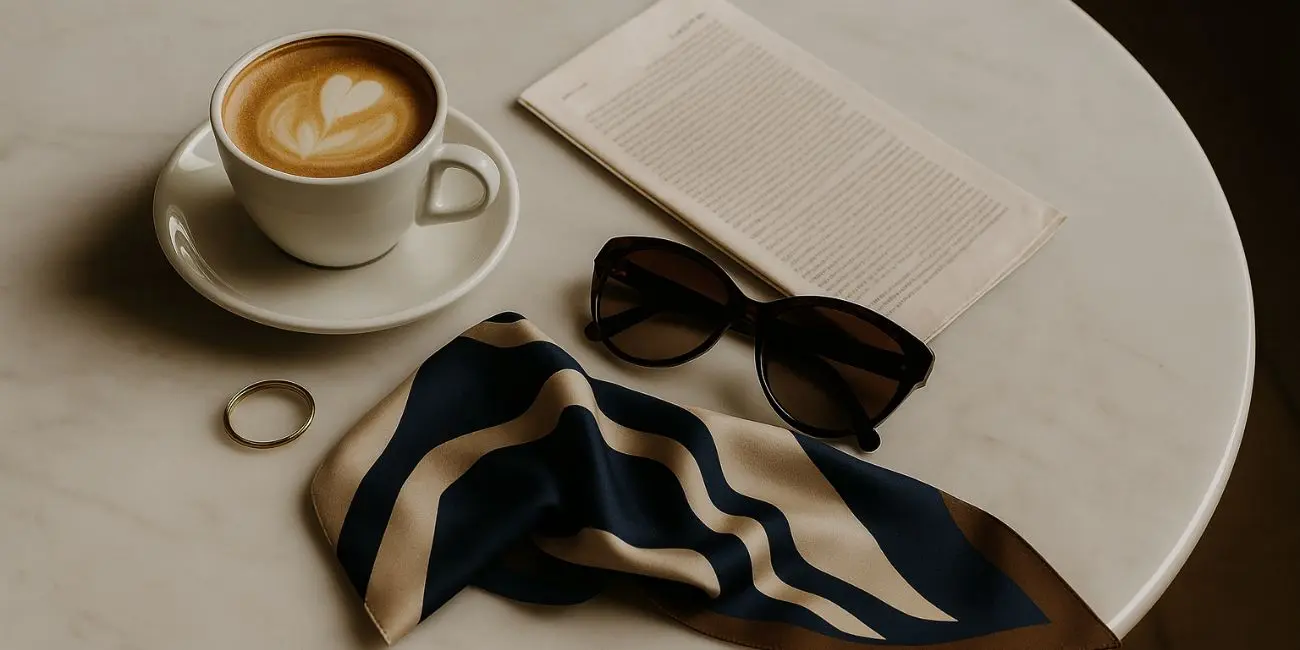
She never wore much jewelry. But the few pieces she kept felt important, like the slim gold bangle I can still hear clicking against the table when she reached for her coffee. Pearl studs that caught the light just enough. A leather watch, the strap worn smooth in all the places her wrist bent.
Her accessories were never there to “finish” a look, they were already part of it. Like punctuation in a sentence, they shaped how everything else came across. If she tied on a silk scarf, it wasn’t to fill a gap. It was because the outfit didn’t feel complete without it.
Want the formula behind outfits like these?
The Timeless Wardrobe Blueprint: a 28-page workbook for women. $19.00 now $14.25 with code WARDROBE25 (ends September 24, 2026).
See the Blueprint5. Seasonal swaps
Twice a year, my mother would pull everything off the rails, store away what wasn’t in season, and bring forward what was. It was never about having a bigger wardrobe. It was about really knowing what was in it. Each time she took things out to fold, store, or bring forward for the season. She was checking them, feeling the fabric, making sure everything was still in good shape.
These little seasonal rituals make your wardrobe last longer. They also make getting dressed in the morning faster because you’re only looking at clothes you can actually wear right now.
6. Quality is felt, not flashed

My mother never bragged about her clothes, and you’d never spot a visible logo in her wardrobe. But when you touched her sweaters, you could feel the difference. When she moved, her coats had a certain drape you just don’t get from a rushed purchase.
Learning how to dress classic is learning that quality is about fabric, cut, and care, not about broadcasting a label. That’s why so much of old money style looks understated from afar, but up close, you notice the stitching, the fabric weight, the way it moves.
7. Know your uniform
By the time I hit my teenage years, I pretty much knew what she’d show up in. Dinner with friends? Probably the wide-leg trousers with a silk blouse, and slingbacks she’d slip on without thinking. A school event meant the tailored dress and her wool coat. For errands, it was almost always dark jeans, a striped tee, and those loafers she’d had forever, polished to a quiet shine.
It wasn’t repetitive, it was a personal uniform. She knew what worked, so she didn’t waste time staring into the closet, wondering if she should reinvent herself every morning. And ironically, that consistency made her style more recognizable.
8. Taking care is part of the look
I once watched her polish her leather boots while talking on the phone. It was just part of her routine. She said shoes show your standards, if they’re scuffed and dirty, the whole outfit feels off.
She would handwash the delicate knits, hang her coats out to air before tucking them back in the closet, and fold sweaters instead of hanging them because “they’ll stretch if you do.” I didn’t think much of it back then, but those little habits are probably why she could wear the same things for years, and they still looked just right on her.
9. It’s not just the clothes
The thing is, the way she dressed matched the way she carried herself. Shoulders back, no frantic rushing, speaking softly. The clothes were part of the story, but not the whole story.
If you only take one old money style tip from her example, it’s this: elegance starts before you even get dressed. The clothes are an extension of who you are, not the other way around.
How it shows up in my own style now

These days, my closet is different from hers in some ways. There’s more denim in my closet now, and a few prints that are bolder than anything my mother would have picked for herself. Still, I can see her touch in there. It’s in the way I leave space between my jackets so they don’t get crushed, and the way I pause before buying something, turning it over in my hands to decide if I’ll still want it years from now.
I’ve kept some of her rules without even meaning to. I still think it’s better to own fewer things and choose them with care. I still care more about the way something fits me than the label sewn inside. And when I’m standing in front of the mirror not sure what to wear, I almost always end up in my version of her old standby:
a navy blazer, a straight-leg jeans and low heels.
Sometimes I wonder if, years from now, someone will open my closet, take it all in, and quietly pick up the same lesson I learned from hers.
Because what my mother’s closet taught me about style is that clothes aren’t just clothes, but they’re a history, a habit, and a kind of love.
That’s my story, at least… a mix of habits I borrowed and a few I’ve made my own. I’m curious, though: have you learned any style lessons from your mother’s (or grandmother’s) closet? Maybe a tip you still follow, or a piece you’ve kept all these years? I’d love to hear it. Share your thoughts in the comments so we can swap a few stories.
Want the Full Wardrobe Formula?
The Timeless Wardrobe Blueprint is a 28-page workbook for women that walks you through the exact formula behind outfits like these.
$19.00 now $14.25 with code WARDROBE25 (ends September 24, 2026).
Shop the BlueprintYou Might Also Like


