


This post contains affiliate links. If you make a purchase through one of these links, Heritage Mode Maison may earn a small commission at no extra cost to you.
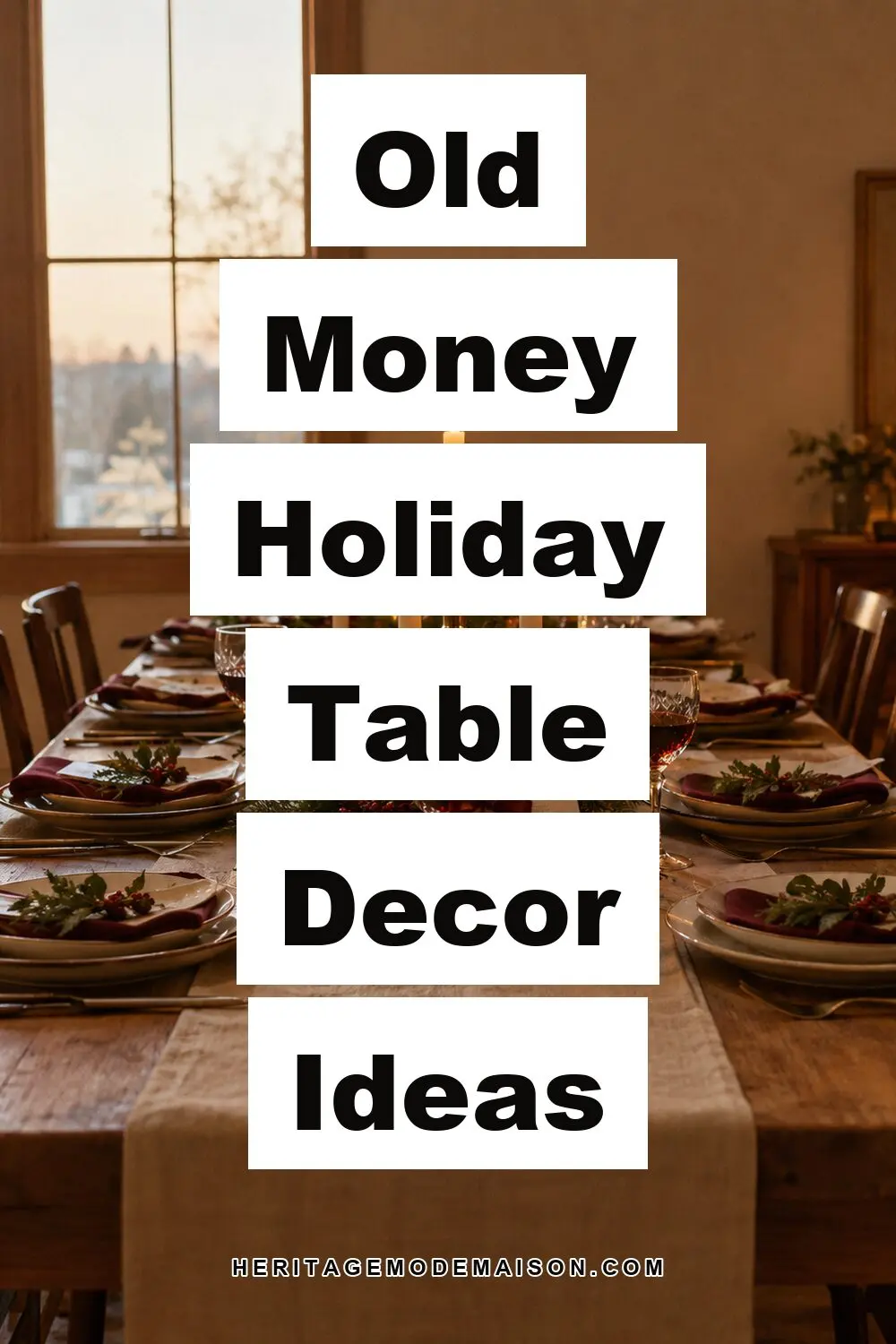
I didn’t grow up with a big holiday budget, but I did grow up watching my grandmother set a table that looked like it belonged in a magazine using half the stuff most decorating guides tell you to buy. That’s the whole idea behind old money holiday table decor ideas: the table looks collected over years, not staged for one night.
None of this requires new dishware or a florist on speed dial. It’s really a handful of small decisions, real candlelight, cloth over paper, plates that don’t compete with each other, repeated on a table you likely already own.
If you’re after a quiet luxury holiday tablescape rather than a red-and-green display, these fourteen ideas are the ones I actually use, not just the ones that photograph well.
1. Let Natural Textures Do the Heavy Lifting
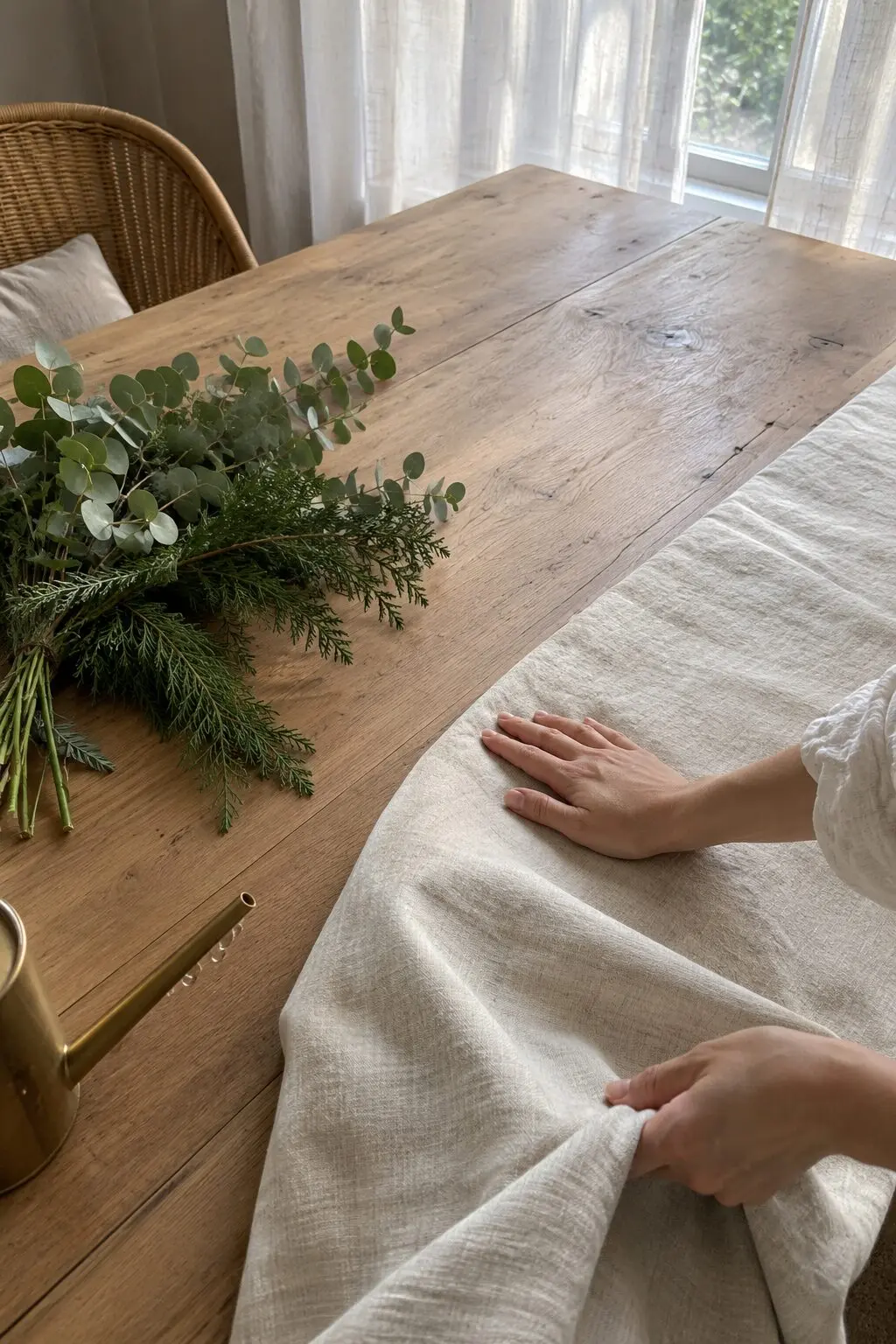
Linen, raw wood, and real greenery set the mood before anything else goes on the table, and they do it better than any single centerpiece could.
The mistake most people make is layering on shine and glitter first, instead of starting with texture and adding metallic pieces later, in small amounts.
2. Mix What You Inherited With What You Bought Last Week
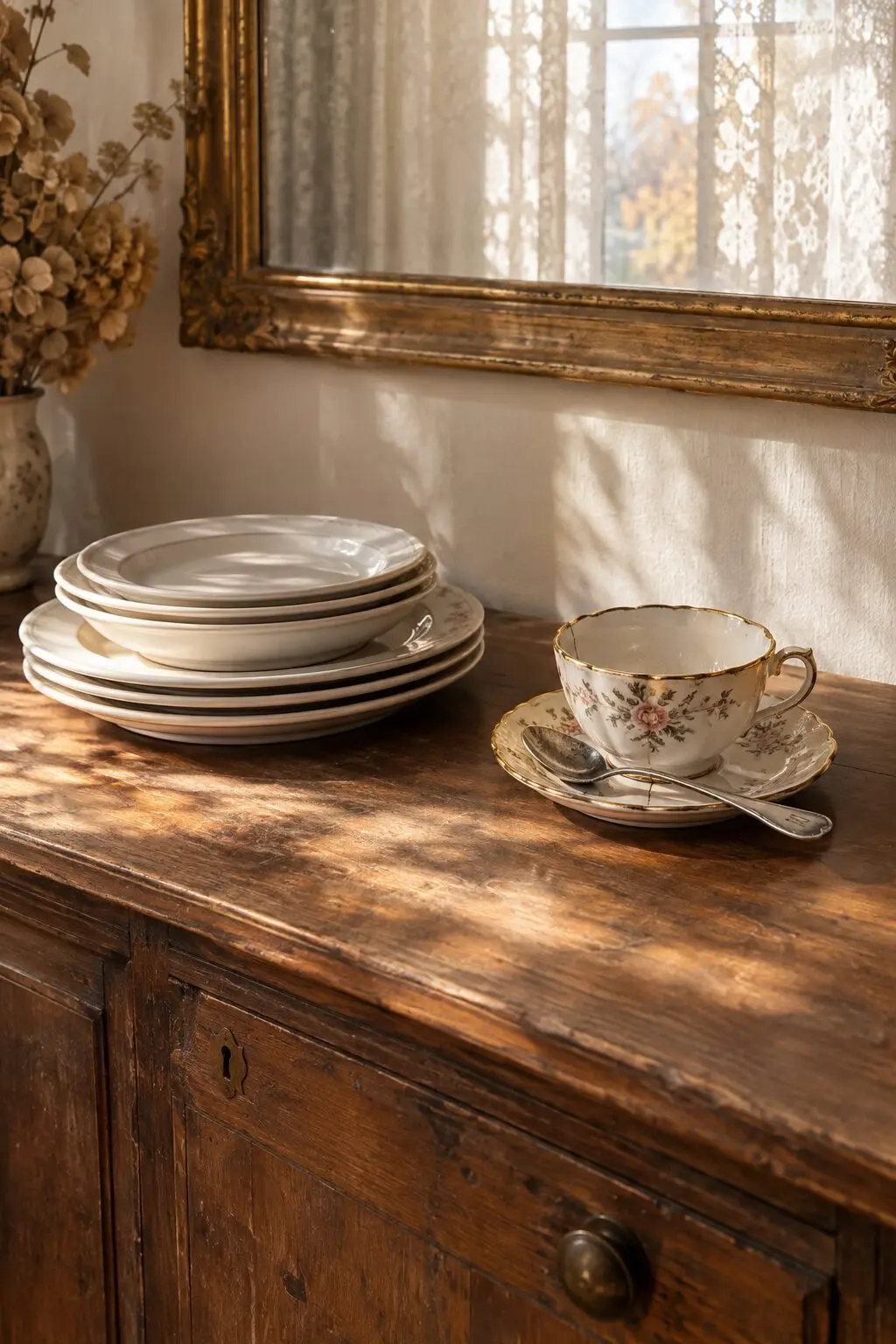
A table set entirely in inherited china reads like a museum. One set entirely in new dishware reads like a showroom floor.
The pieces don’t need to match, they just need to belong to you.
The real mistake is treating heirloom pieces as too precious to use, so they sit in a box while the table gets an entirely new, forgettable set instead.
3. Trade Red and Green for a Quieter Palette
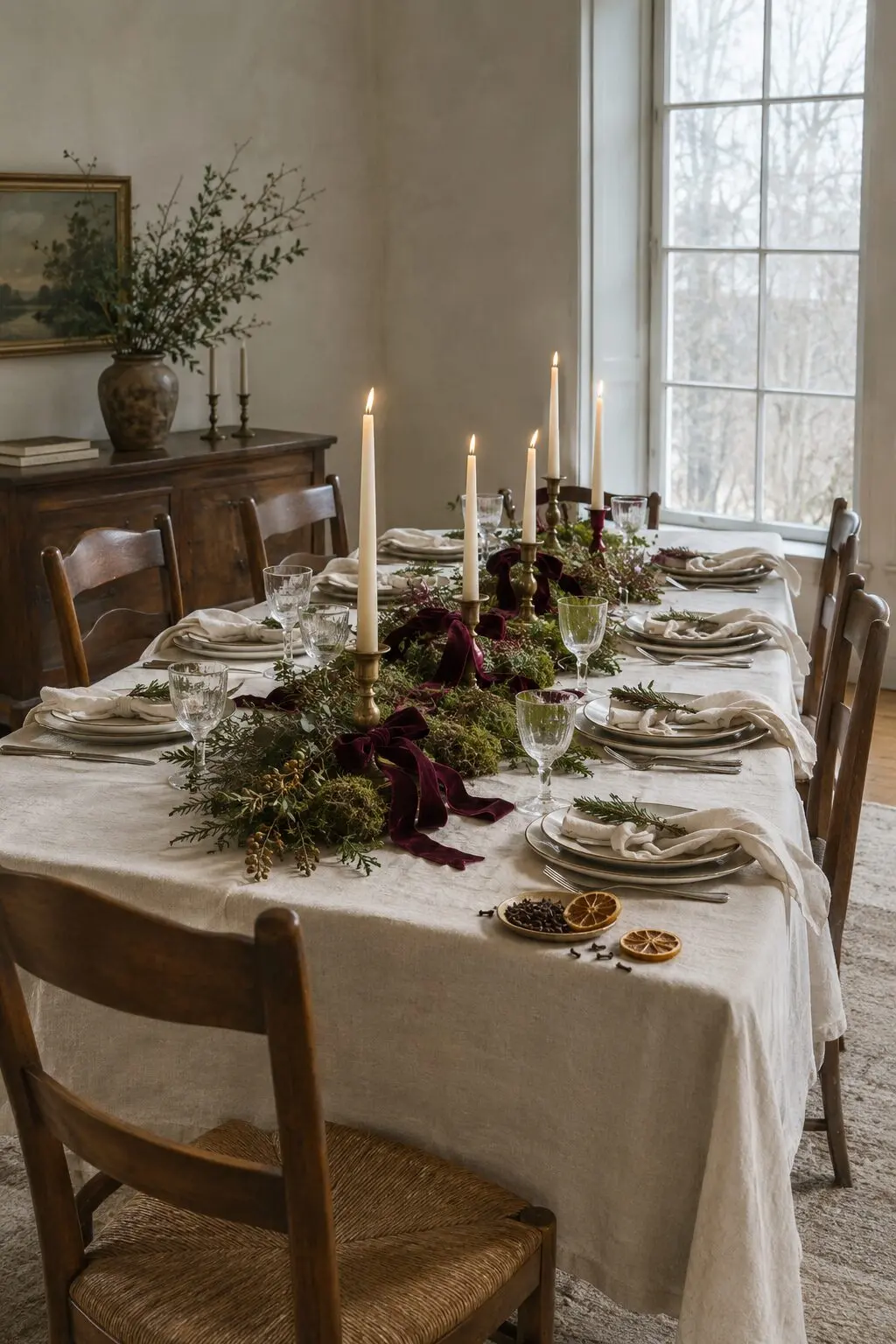
Cream, moss, and burgundy read as intentional in a way that true red and green rarely manage on a table.
Most people’s mistake is picking their palette from ornament packaging instead of choosing two or three colors already in the room and building outward from there.
4. Make the Greenery Look Gathered, Not Delivered
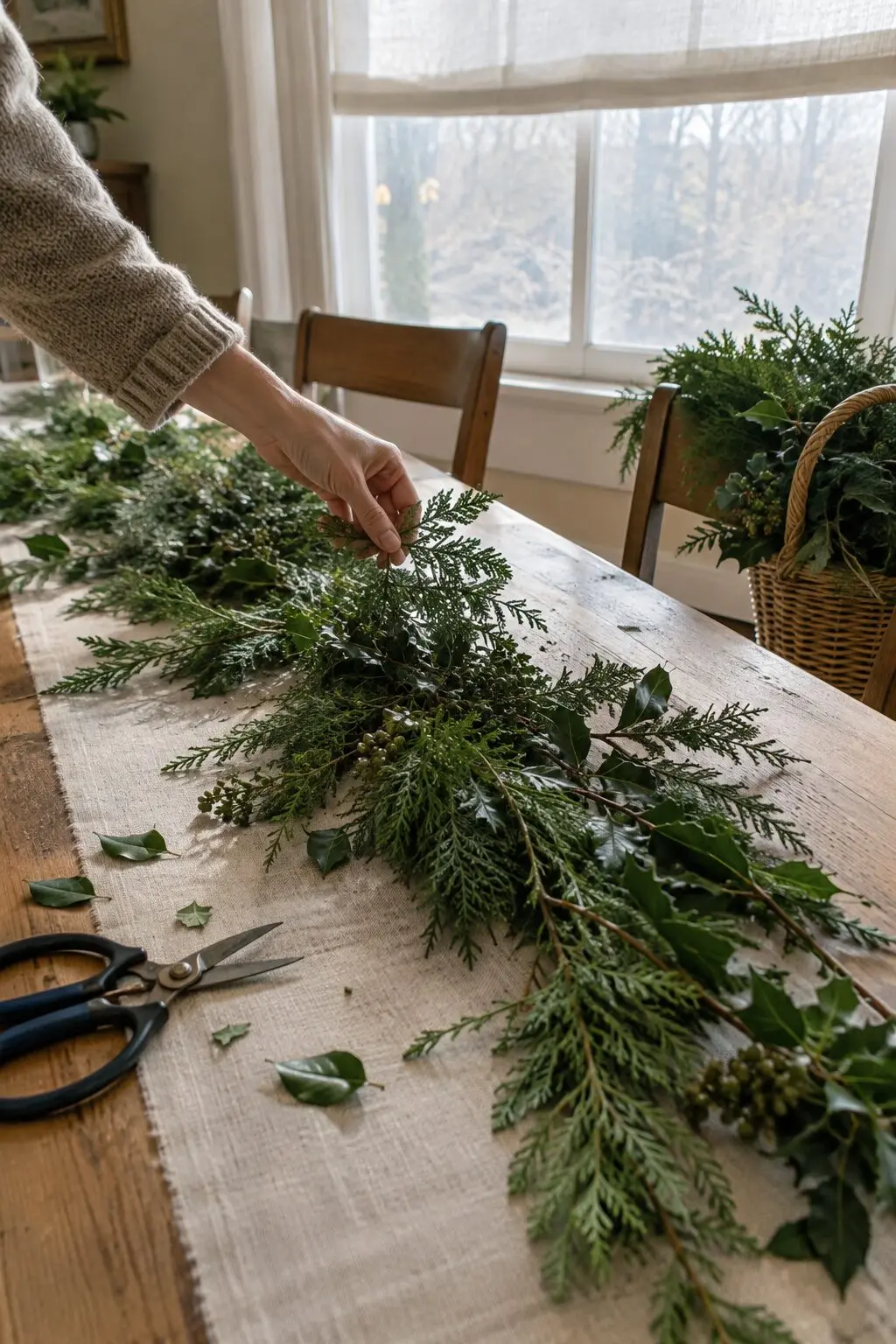
A uniform florist garland, however pretty, announces itself as store-bought the second you look closely. Loosely tucked, asymmetric sprigs do more with less.
It’s the one part of the table where a little mess is the whole point.
The mistake is spacing greenery evenly like a garland kit, when a slightly lopsided arrangement reads as gathered by hand.
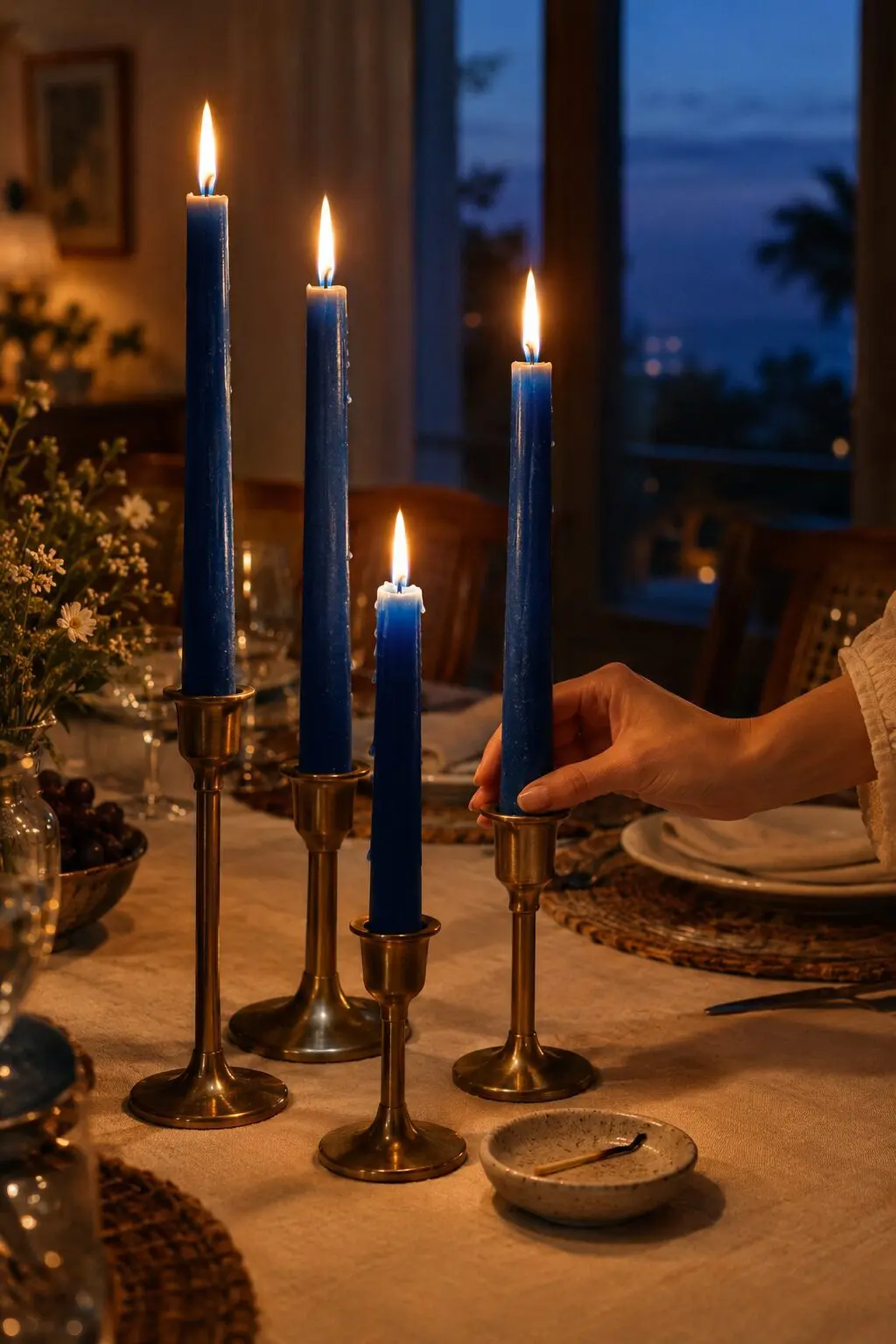
5. Let Candlelight Do Most of the Work
Editor’s Picks
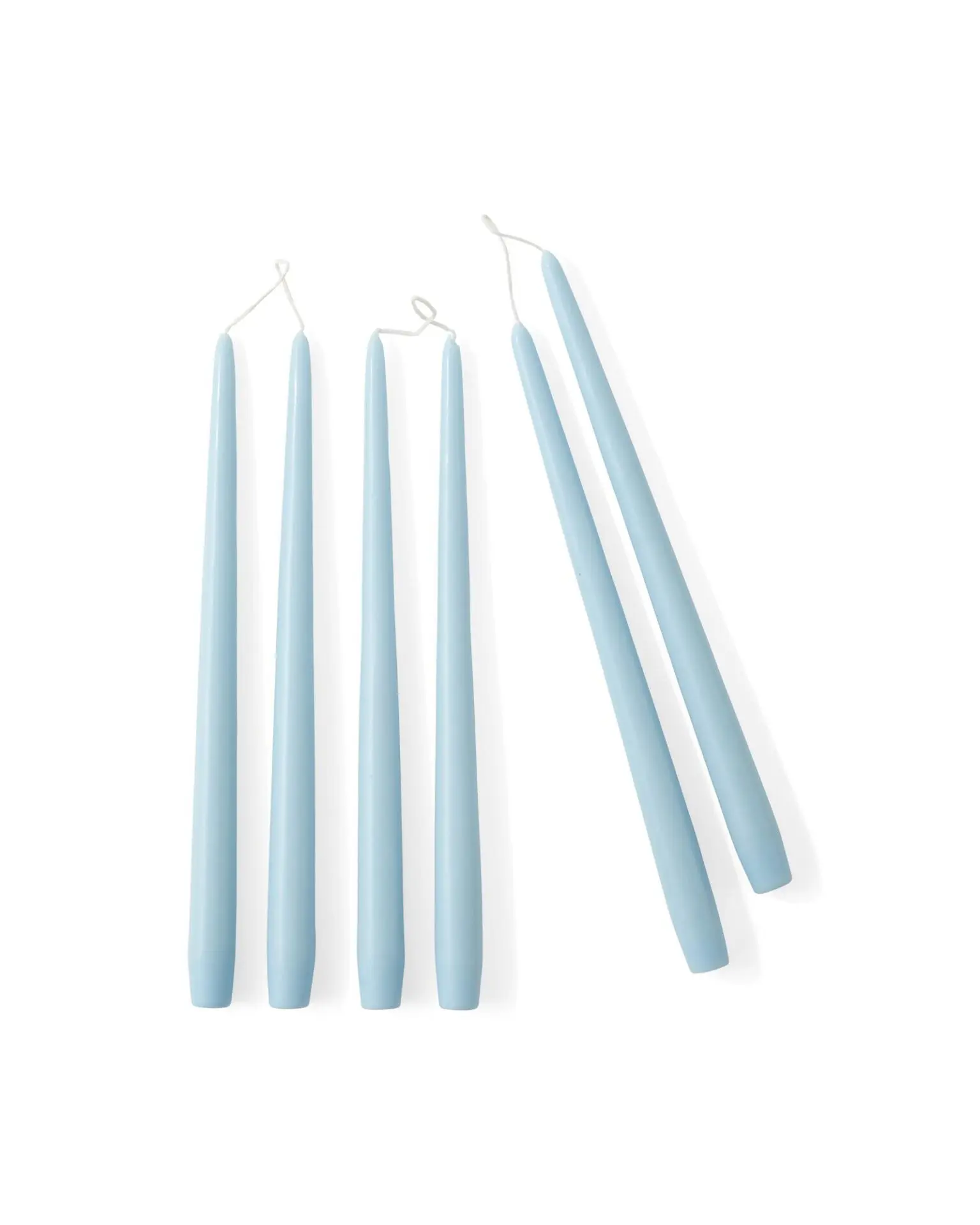
Taper Candles (Set of 6)
$28 | These slim tapers come in a rich blue that reads more jewel-tone than primary bright, so they sit comfortably on a muted holiday table next to cream linens.
Real taper candles at varying heights change the whole feeling of a table more than any centerpiece I’ve ever bought.
The mistake I see constantly is using one uniform set of candles all lit to the same height, which flattens the glow instead of layering it.
Styling tip: I keep an extra taper in a drawer so I can vary the heights, instead of trimming a matched set down until they’re all the same length.
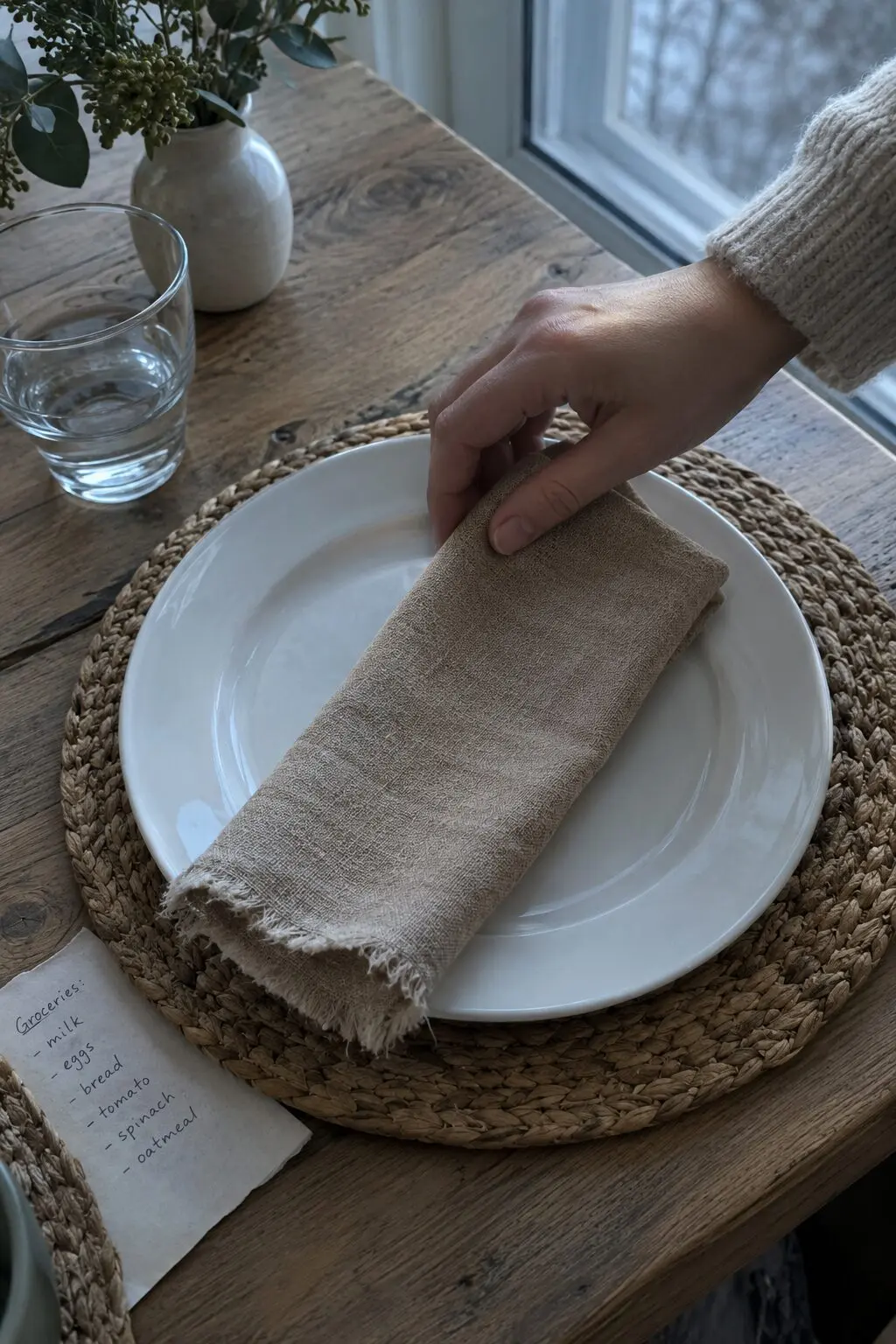
6. Cloth Napkins Are Non-Negotiable
Editor’s Picks
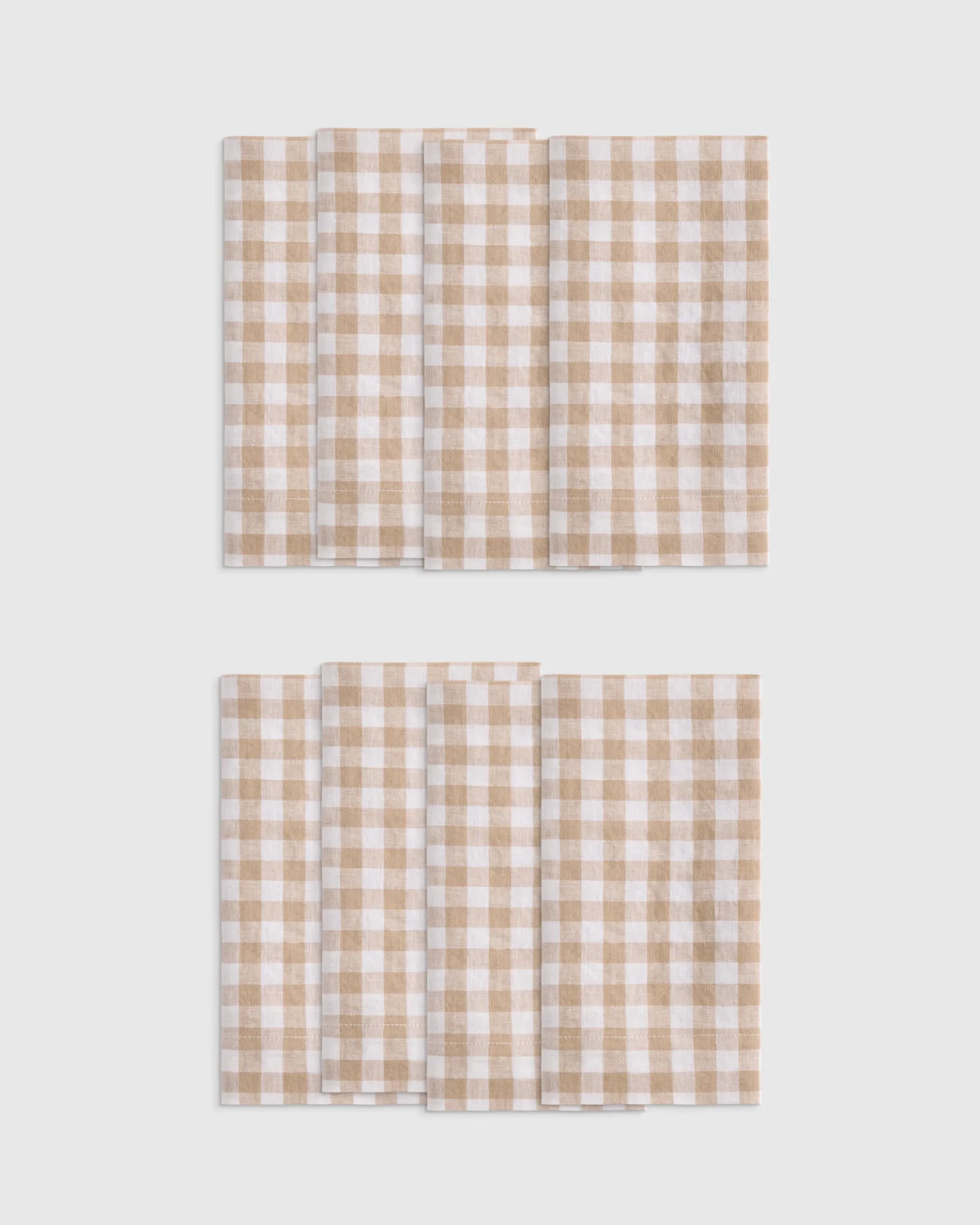
European Linen Wide-Hem Gingham Napkins, Set of 8
$54.90 | Woven from European flax with a wide hem in a warm cafe tone that reads as a soft neutral, exactly the muted note this kind of table calls for.
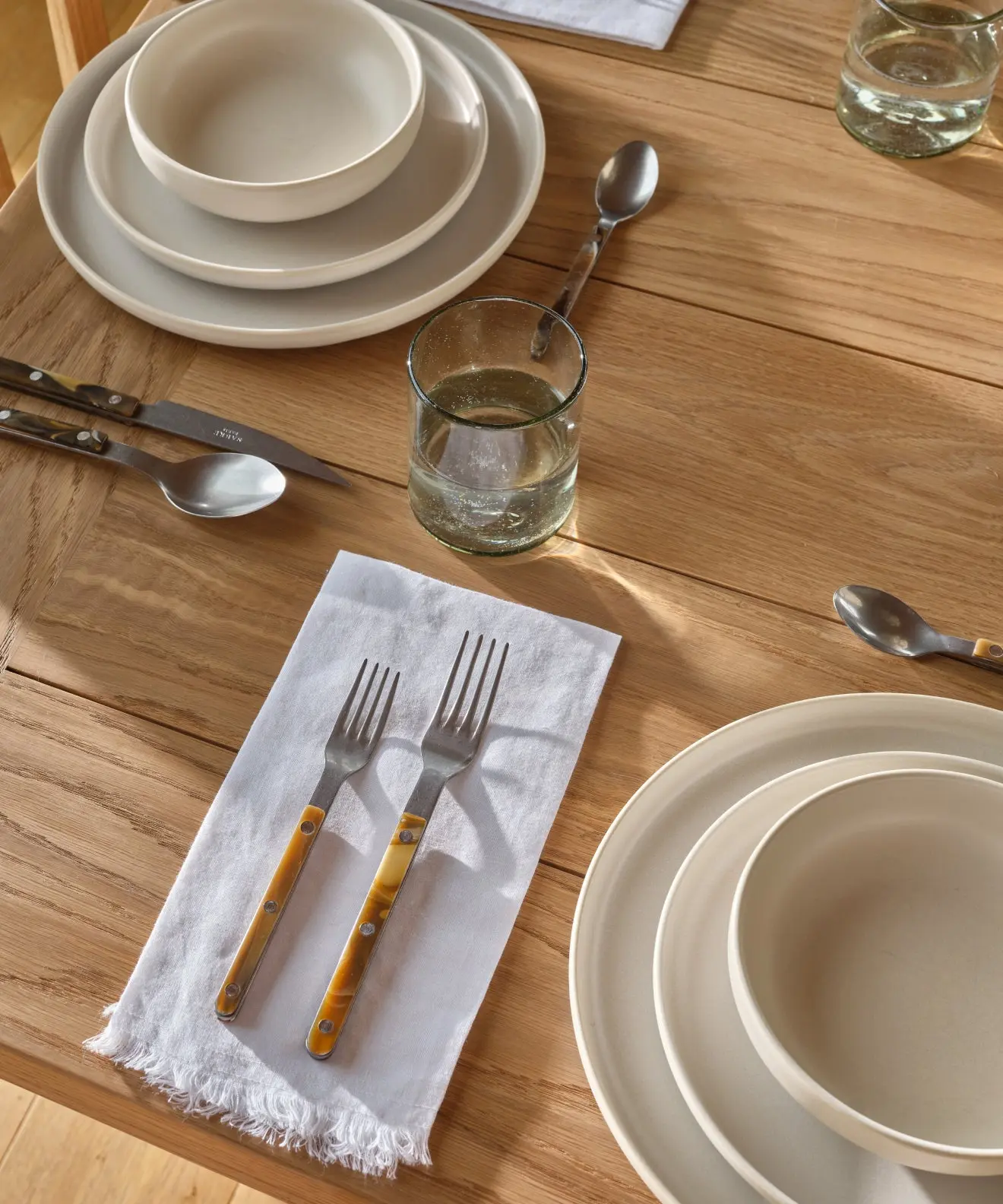
Frayed Linen Napkin
$20 | Sold individually in ivory, so it’s easy to build out exactly as many as you need, and the frayed edge gives it a collected-over-time quality.
Soft, real-fiber napkins signal care in a way paper never quite manages, and they’re one of the cheapest upgrades on the whole table.
The mistake is assuming cloth napkins need to be pristine white and perfectly pressed. A slightly rumpled, warm-toned napkin looks more like your table, less like a rental.
Styling tip: Simple folds work best for me, just in thirds, letting the raw edge show instead of hiding it under a tight press.
Want the formula behind outfits like these?
The Timeless Wardrobe Blueprint: a 28-page workbook for women. $19.00 now $14.25 with code WARDROBE25 (ends September 24, 2026).
See the Blueprint7. Keep the Plates Simple and Let the Table Breathe
Editor’s Picks
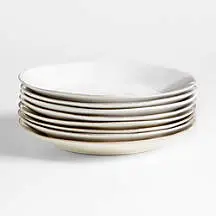
Marin White Stoneware Dinner Plates, Set of 8
$89.95 | A hand-antiqued stoneware plate in soft white with no pattern, exactly the let-the-table-breathe approach this tip is built around.
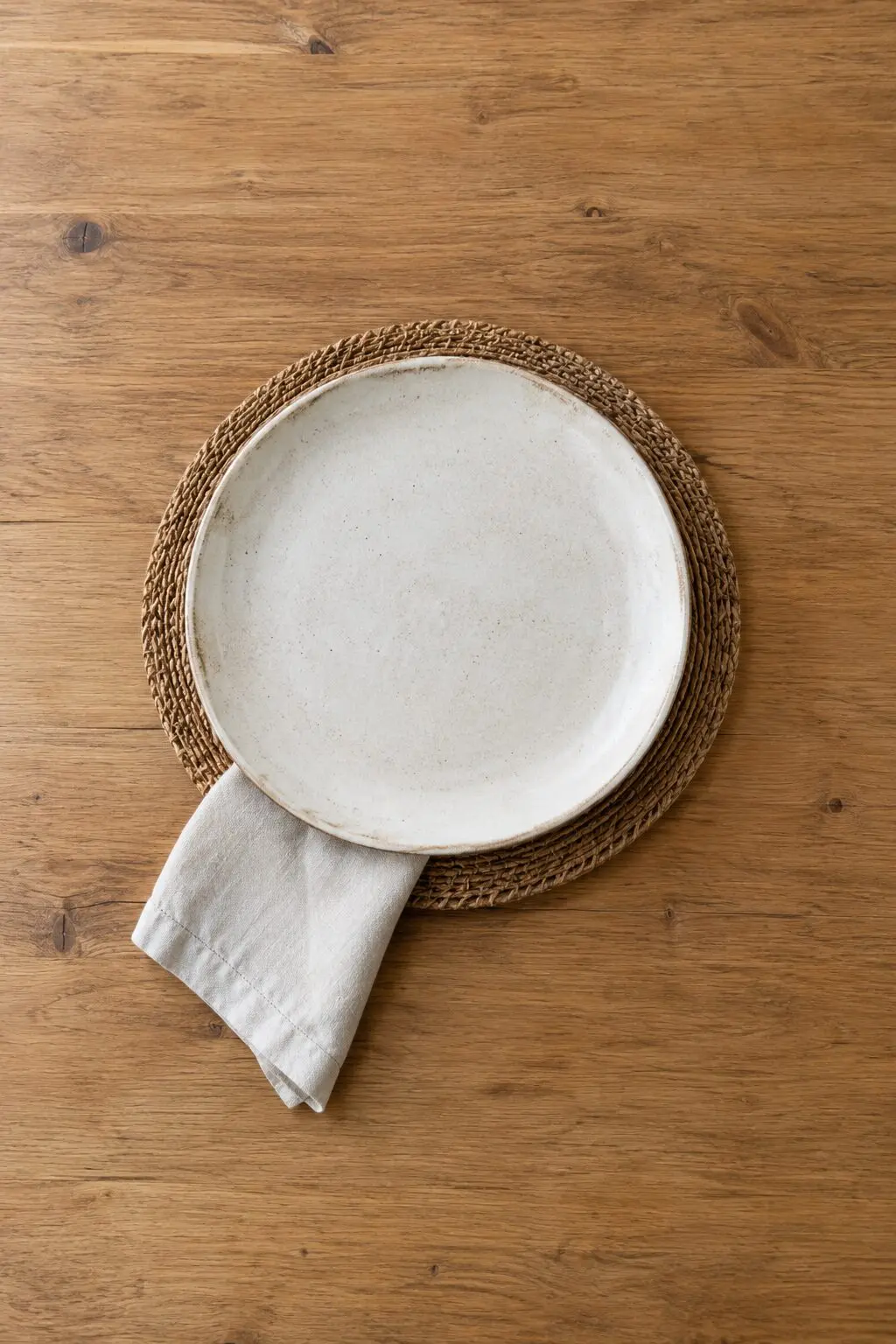
One good charger and a plain dinner plate outperform a stack of patterned dishware, mostly because they let everything else on the table actually show up.
The mistake is stacking three or four patterned pieces per setting when one plain plate, layered simply, does more with less effort.
Styling tip: I let the plate sit slightly off the table’s centerline instead of squaring everything up, since it reads less like a rental company set it.
8. Pick One or Two Personal Touches, Not a Dozen
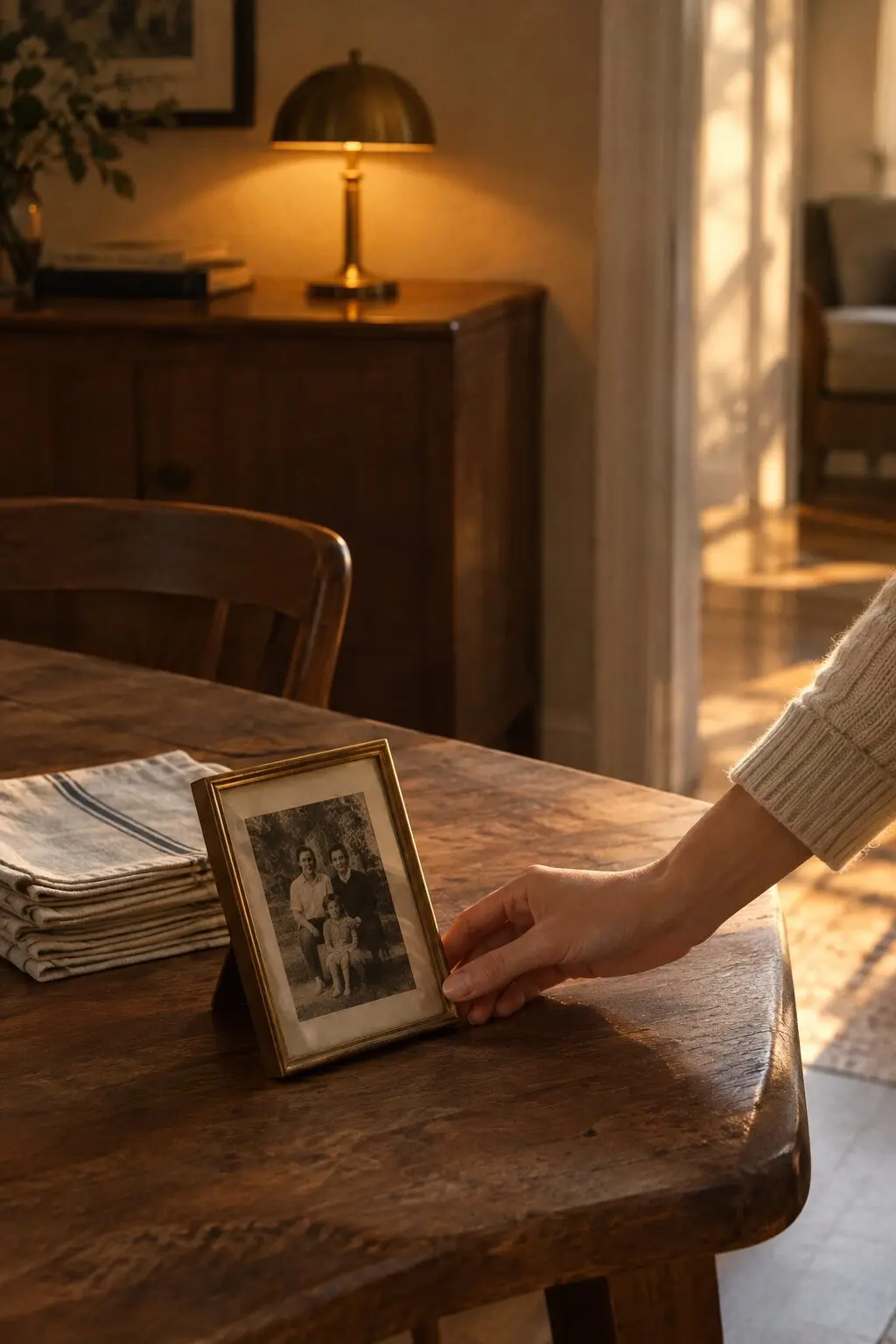
A table crowded with knickknacks reads as trying too hard. A single meaningful object says more.
Restraint is what makes the personal touch actually land instead of disappearing into clutter.
The mistake is adding a personal item and then still filling every remaining inch with generic decor anyway.
9. Balance Shine With Matte
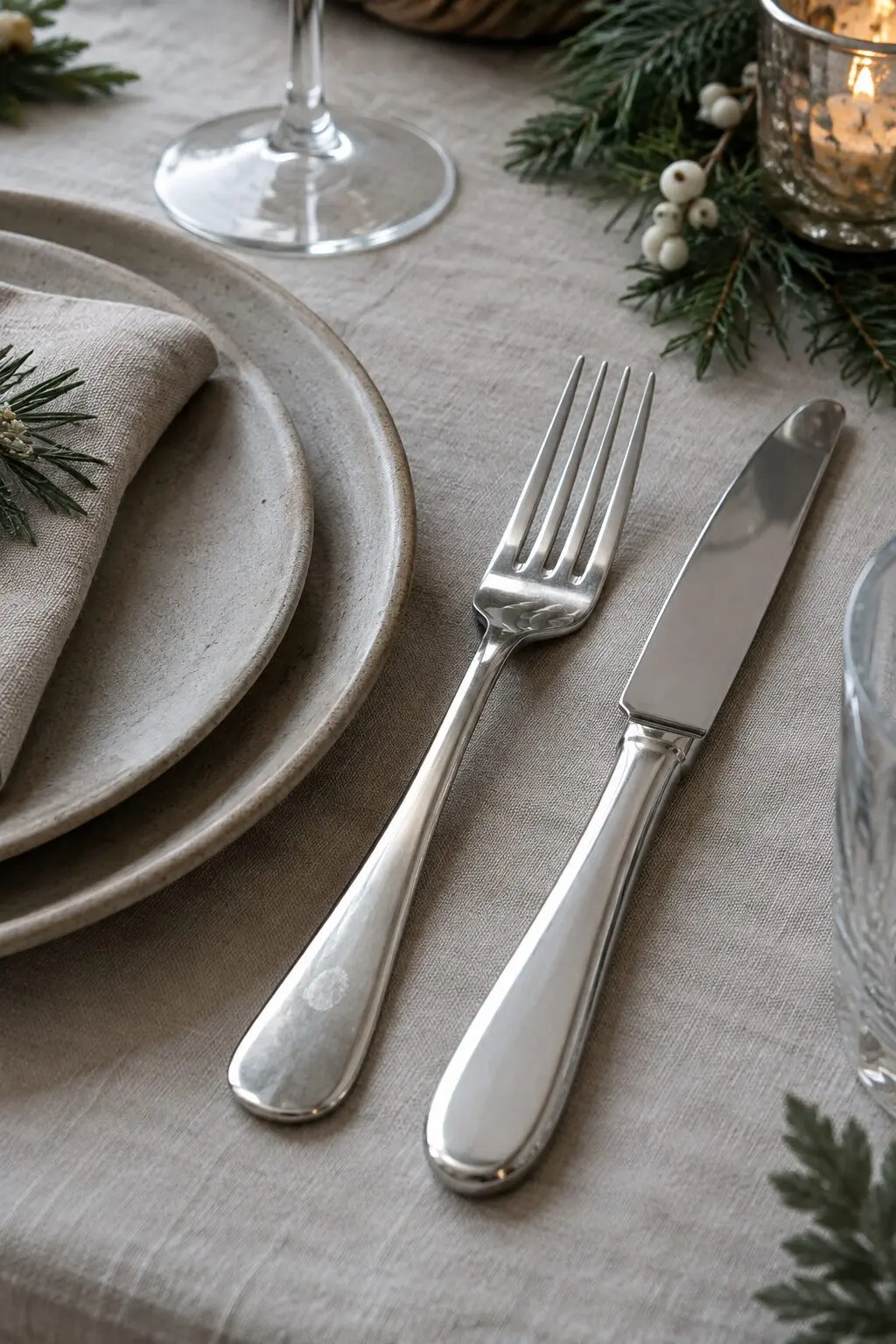
Polished silver next to raw linen and matte ceramics is what keeps a table from feeling like a display case under glass.
The mistake is defaulting to shine everywhere, silver flatware, glossy chargers, mirrored accents, with nothing matte to let the eye rest.
10. Choose Glassware That Actually Catches the Light
Editor’s Picks

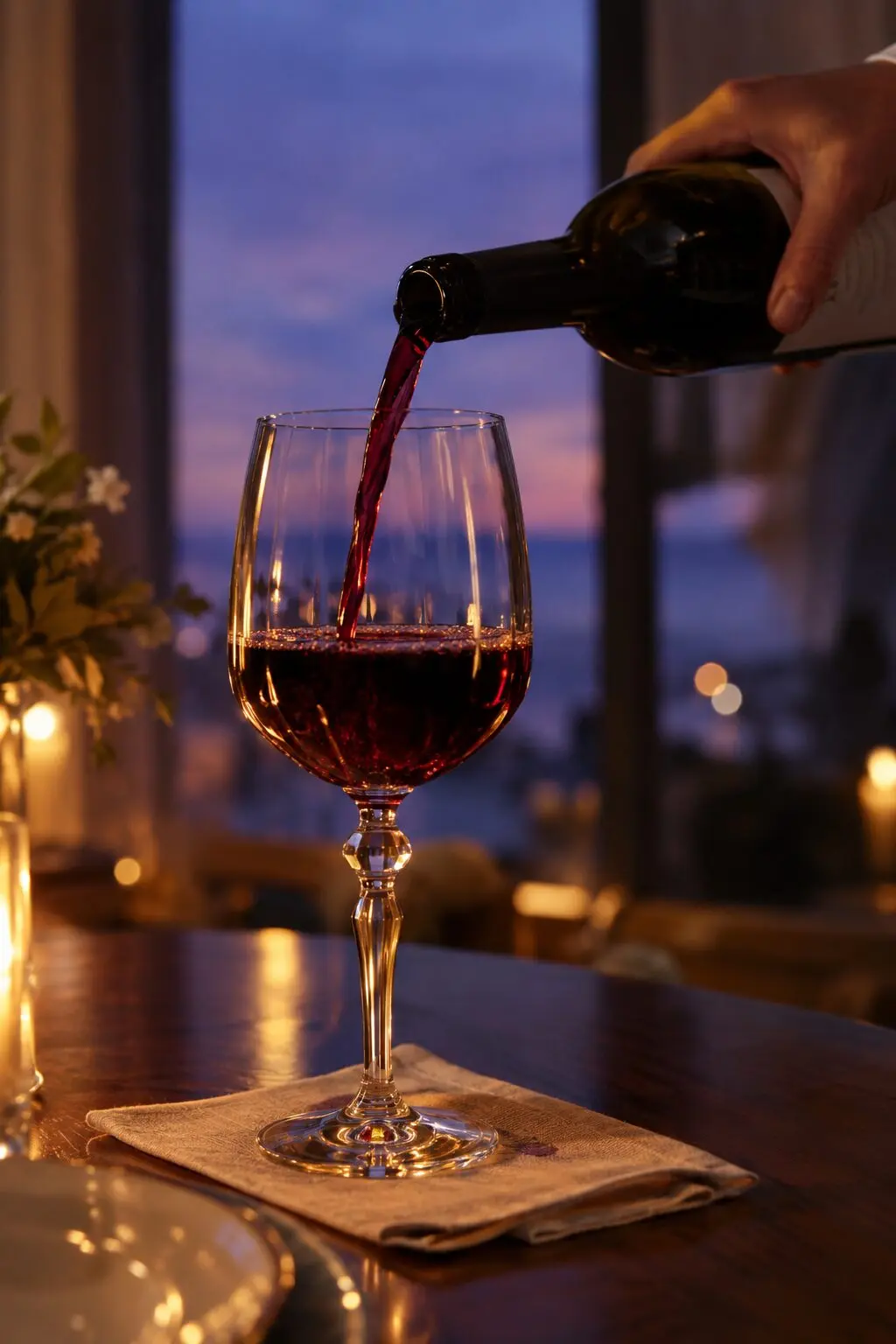
French 10-Oz. Wine Glass
$8.95 | A classic clear glass with a sculpted stem, weighted enough to feel substantial without any color competing with the rest of the table.
A simple faceted or hand-blown glass does more for a table’s sparkle than any extra decor item you could add.
The mistake is reaching for the fanciest glass in the cabinet when a simpler, well-made one throws better light across the table.
Styling tip: Filling glasses just under halfway is the trick I use, since a fuller glass pools the light at the bottom instead of catching the rim.
11. Layer a Runner Instead of Covering the Whole Table
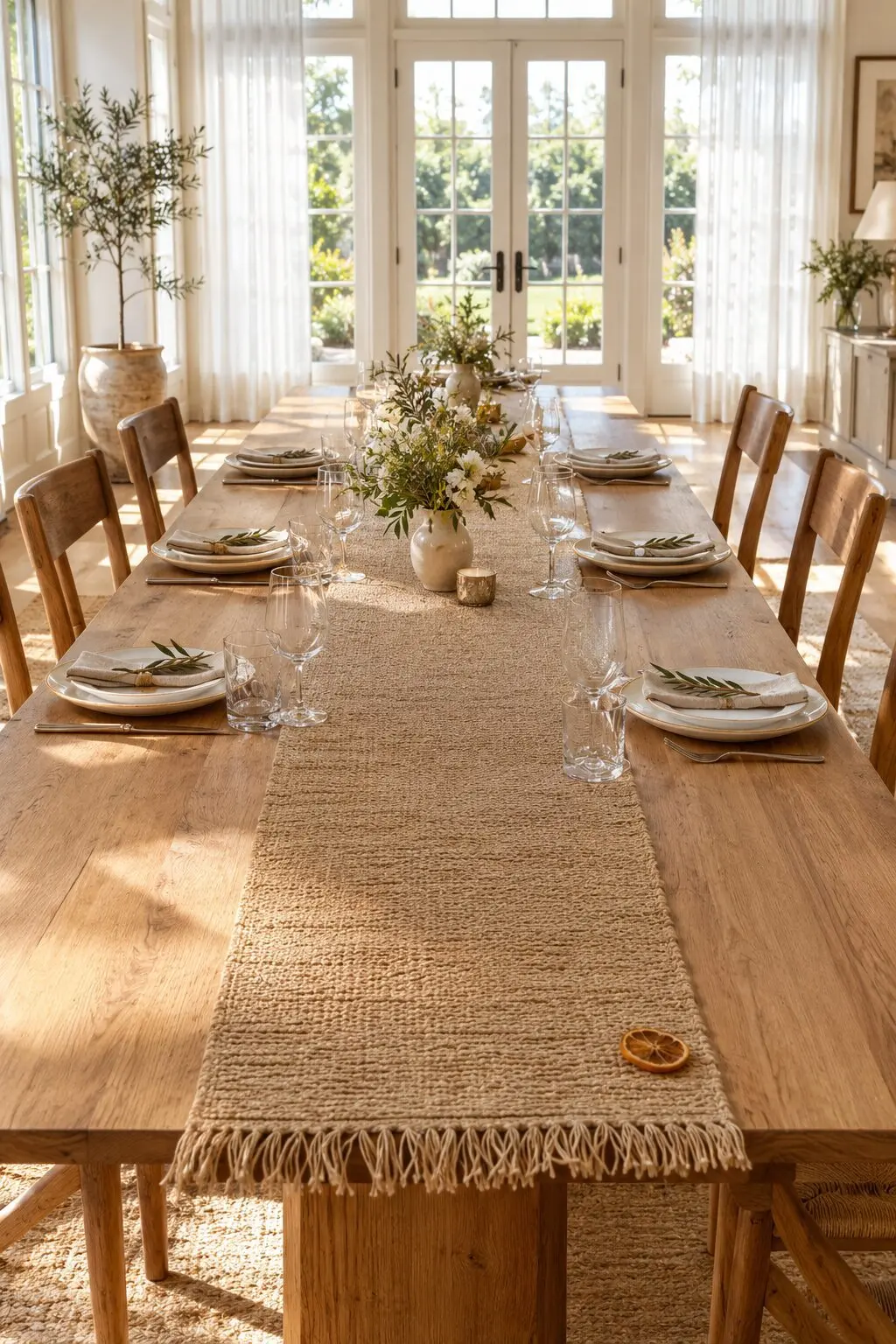
A wide woven runner over bare wood feels more relaxed than covering the whole table, and it shows off the table itself instead of hiding it.
The mistake is choosing a runner so narrow it looks like an afterthought instead of one wide enough to anchor the plates and glasses.
12. Let the Seating Feel a Little Mismatched
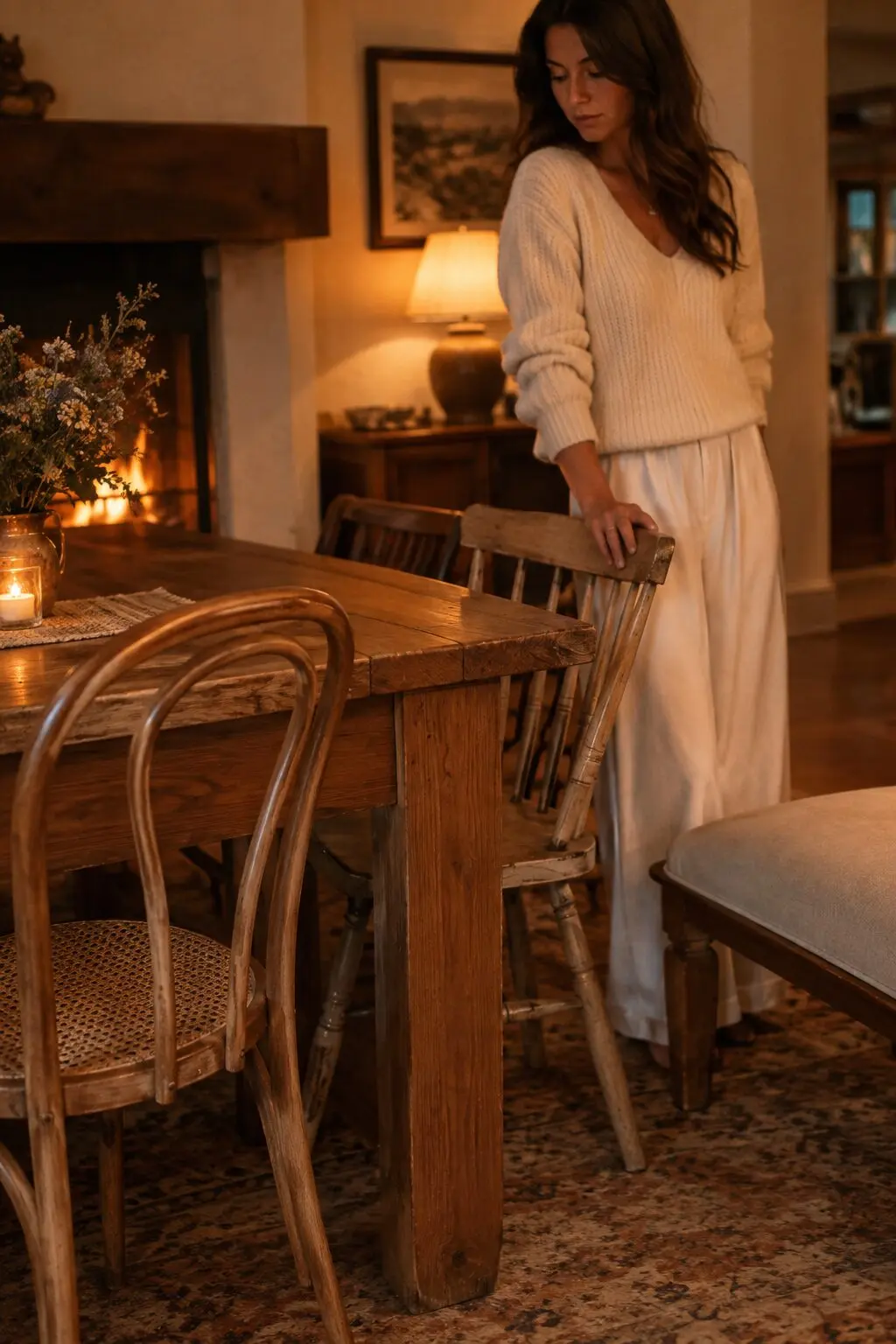
Pulling in a bench, a borrowed chair, or two different chair styles reads as lived-in rather than a rental-showroom set.
My own table has three chair styles at it most years, and it’s never once looked wrong in a photo.
The mistake is assuming mismatched seating looks unplanned. Grouped by height and a shared wood tone, it reads as curated instead.
13. Add One Quiet Finishing Detail
Editor’s Picks
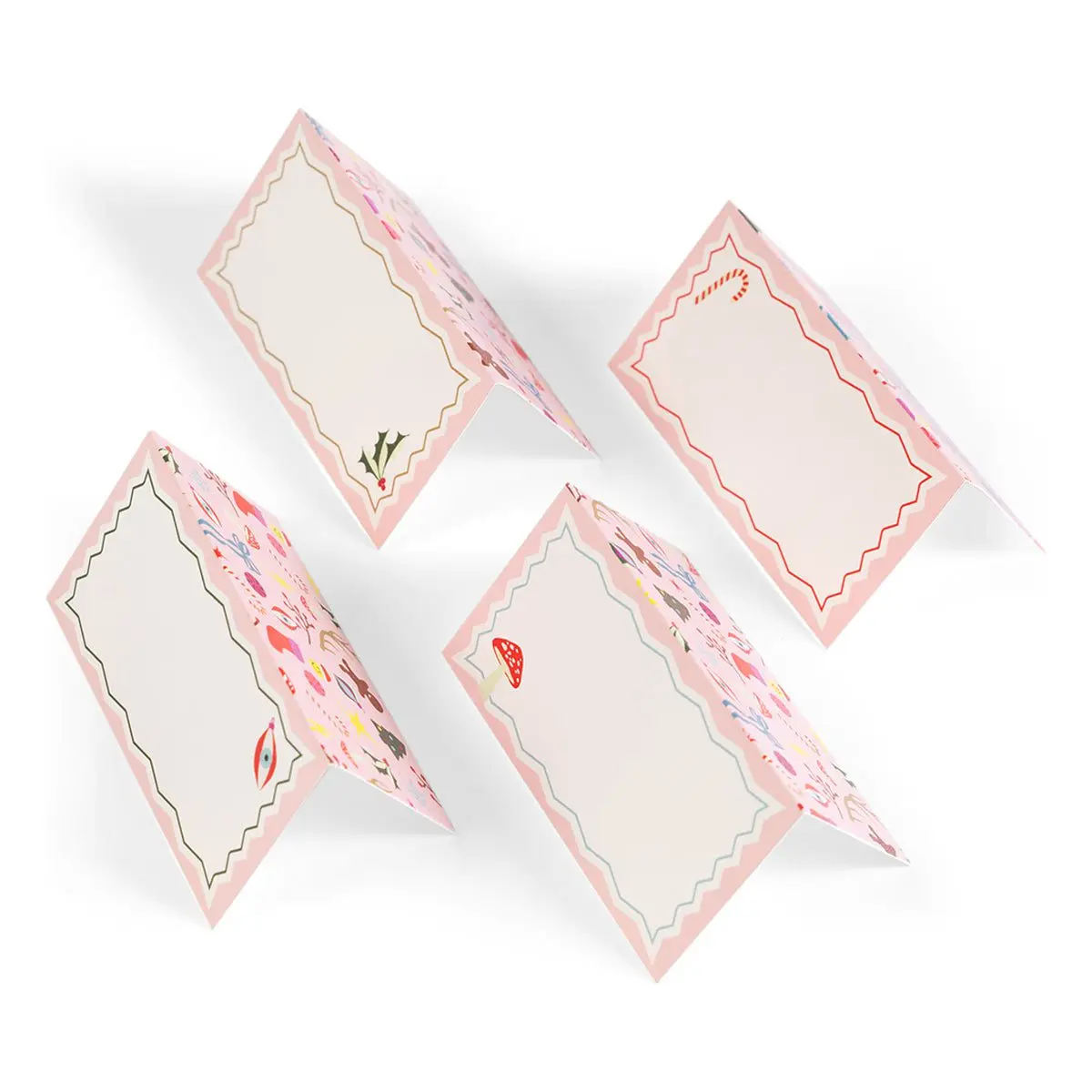
Placecards S/8 – Twinklemas
$8 | A set of eight folding place cards with a bow detail along the top, the exact small finishing touch this tip is about.
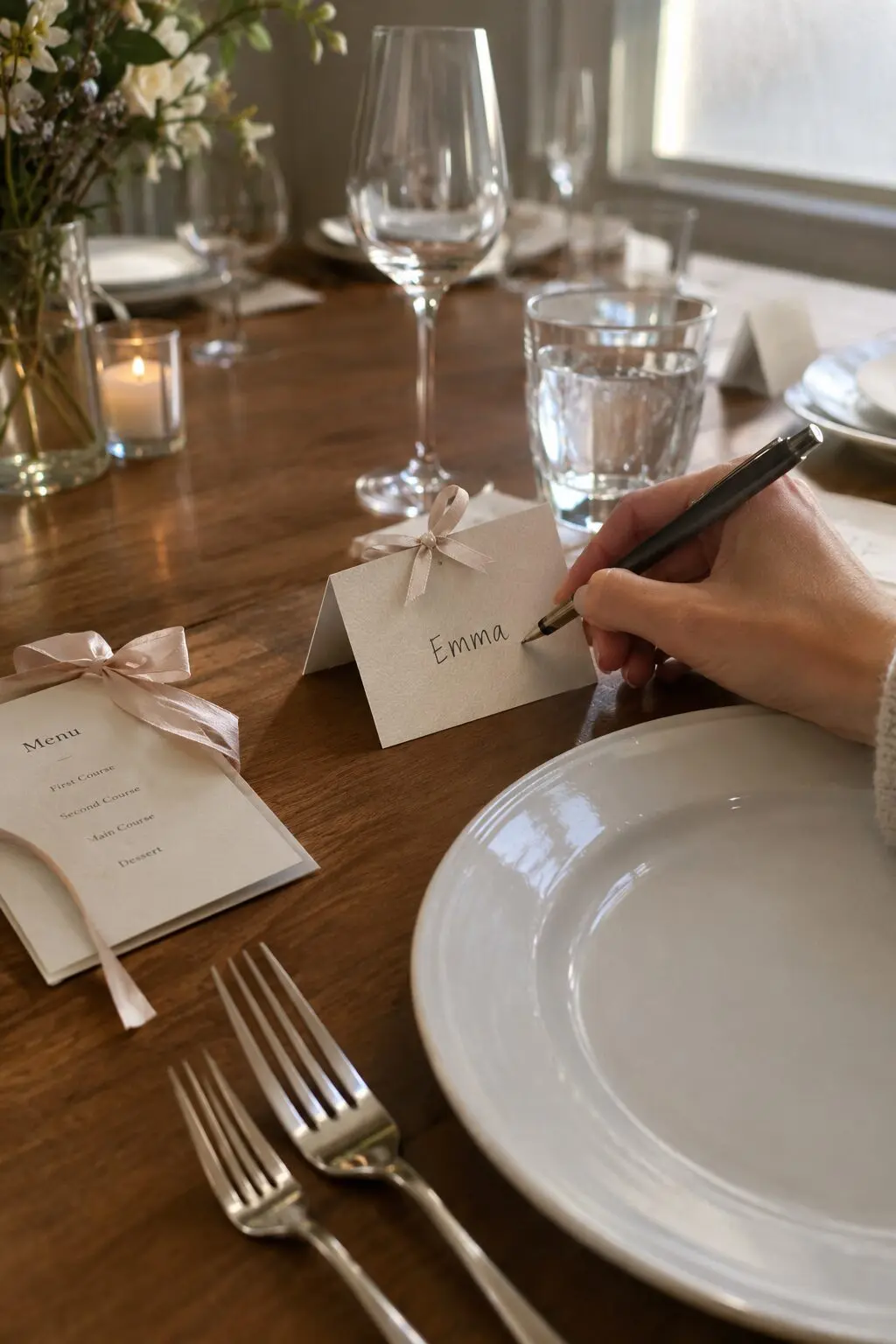
A handwritten place card or a ribbon-tied menu is a small, personal way to close out the setting, and it’s usually the last thing anyone notices you did.
The mistake is skipping this step because it feels like extra effort, when it’s actually the fastest, cheapest addition on the table.
Styling tip: Plain pen, nothing calligraphed, is what I reach for, since a slightly imperfect hand looks more like an actual person set the table.
14. Let the Table Feel a Little Imperfect
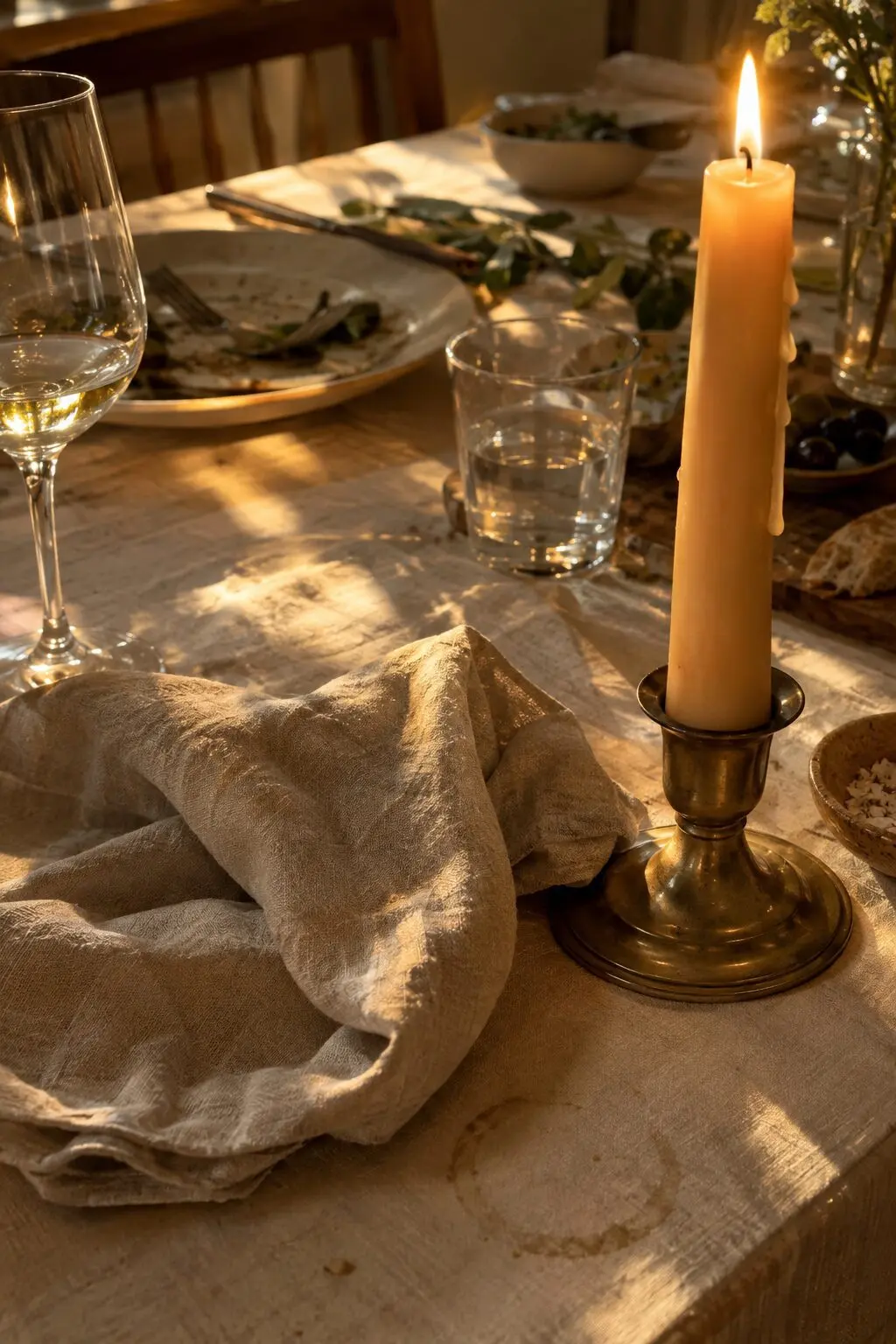
A candle that’s dripped a little, a napkin that’s not folded perfectly, these are the details that make a table feel real instead of styled for a photo.
The mistake most people make is chasing a table that looks untouched, when a table that looks lived-in for twenty minutes is the actual goal.
Want the Full Wardrobe Formula?
The Timeless Wardrobe Blueprint is a 28-page workbook for women that walks you through the exact formula behind outfits like these.
$19.00 now $14.25 with code WARDROBE25 (ends September 24, 2026).
Shop the BlueprintNone of this requires a full re-shop before the holidays. Start with the candles and the napkins, since those two changes alone shift the whole feel of the table.
The table doesn’t need to be new, it needs to look like yours.
Everything else here, the mismatched chairs, the imperfect greenery, the one meaningful object, can get added a year at a time.
Frequently Asked Questions
Do I need to buy all new dishware to get this look?
No, and buying all new dishware is actually the opposite of the point. Mixing pieces you already own with one or two new additions is what makes the table look collected rather than purchased for one night.
What’s the fastest, cheapest change I can make this year?
Swap paper napkins for cloth and add a few taper candles at different heights. Those two changes alone do more visible work than a new centerpiece would.
How do I keep a muted palette from looking dull instead of elegant?
Layer in texture and light instead of extra color. Linen, real greenery, and varied candle heights carry the visual interest that a brighter palette would normally provide.
What if my chairs don’t match?
That’s an advantage here, not a problem to fix. Group them loosely by wood tone or height and they’ll read as intentionally collected rather than mismatched.
Is it okay to use flameless candles for safety around kids or pets?
Real taper candles do more for the mood, but if safety is a real concern, keep them on a stable base out of reach and skip lighting anything right at the table’s edge. Battery tapers with a flicker function are the closest substitute if real flame isn’t workable this year.
You Might Also Like


Save This For Later

Loved old money holiday table decor ideas? Save this pin to your Pinterest board now so you can find it again anytime you need the inspiration.
