








This post contains affiliate links. If you make a purchase through one of these links, Heritage Mode Maison may earn a small commission at no extra cost to you.
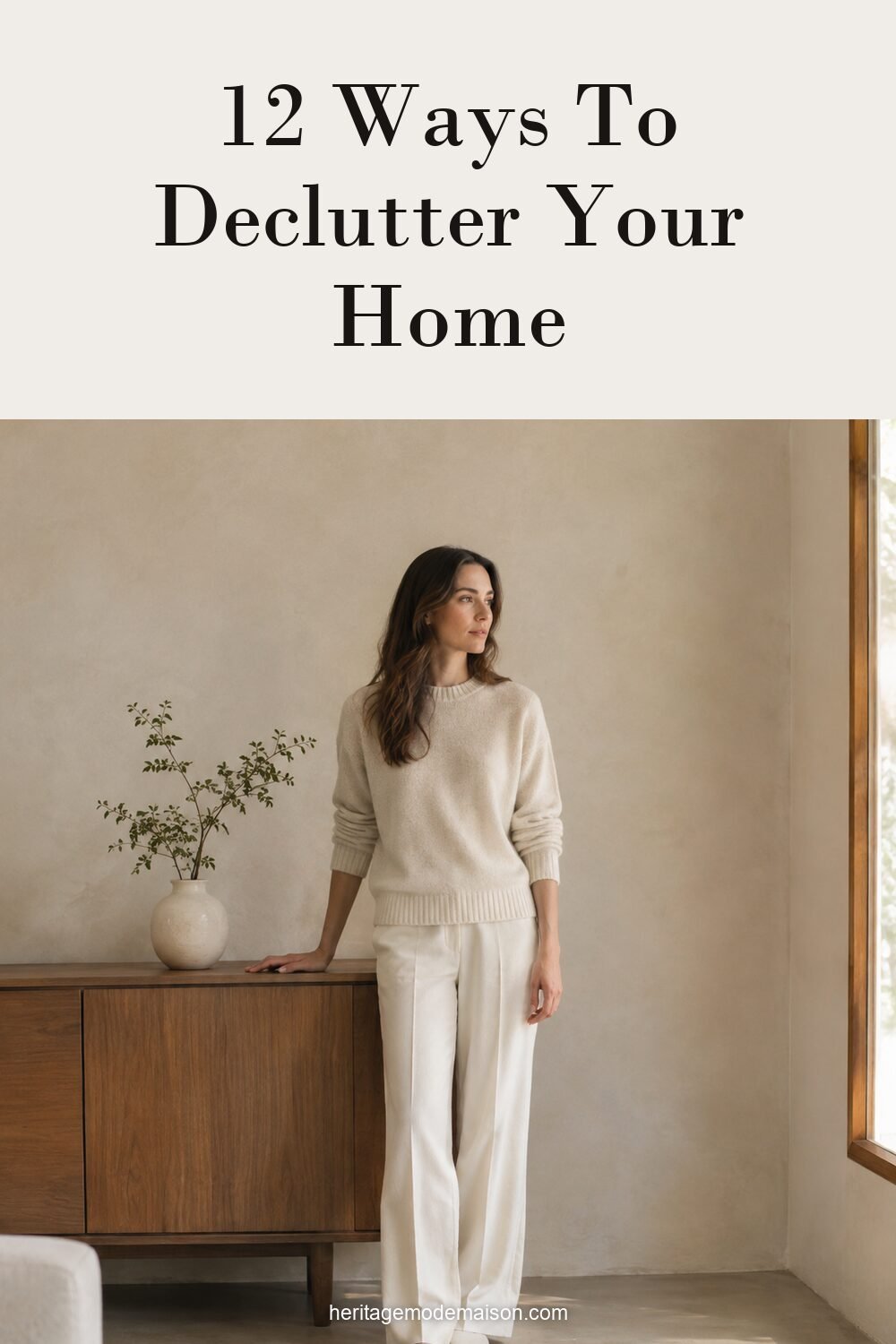
The word declutter gets thrown around so casually now. It usually comes with beige bins, aggressive purging, and the idea that your home should look empty to feel calm.
But step inside a truly beautiful old house and you will see that is not how timeless spaces work. The goal is not emptiness. It is ease.
I used to pull everything out and toss half of it, chasing some version of visual perfection. It never lasted, and the rooms felt borrowed.
The homes I kept thinking about were the opposite: collected shelves, worn furniture, and drawers that opened easily because nothing was fighting for space.
Here are 12 ways to declutter that actually last. Slow, intentional, a little sentimental, but never cluttered.
1. Declutter With a Sense of Permanence
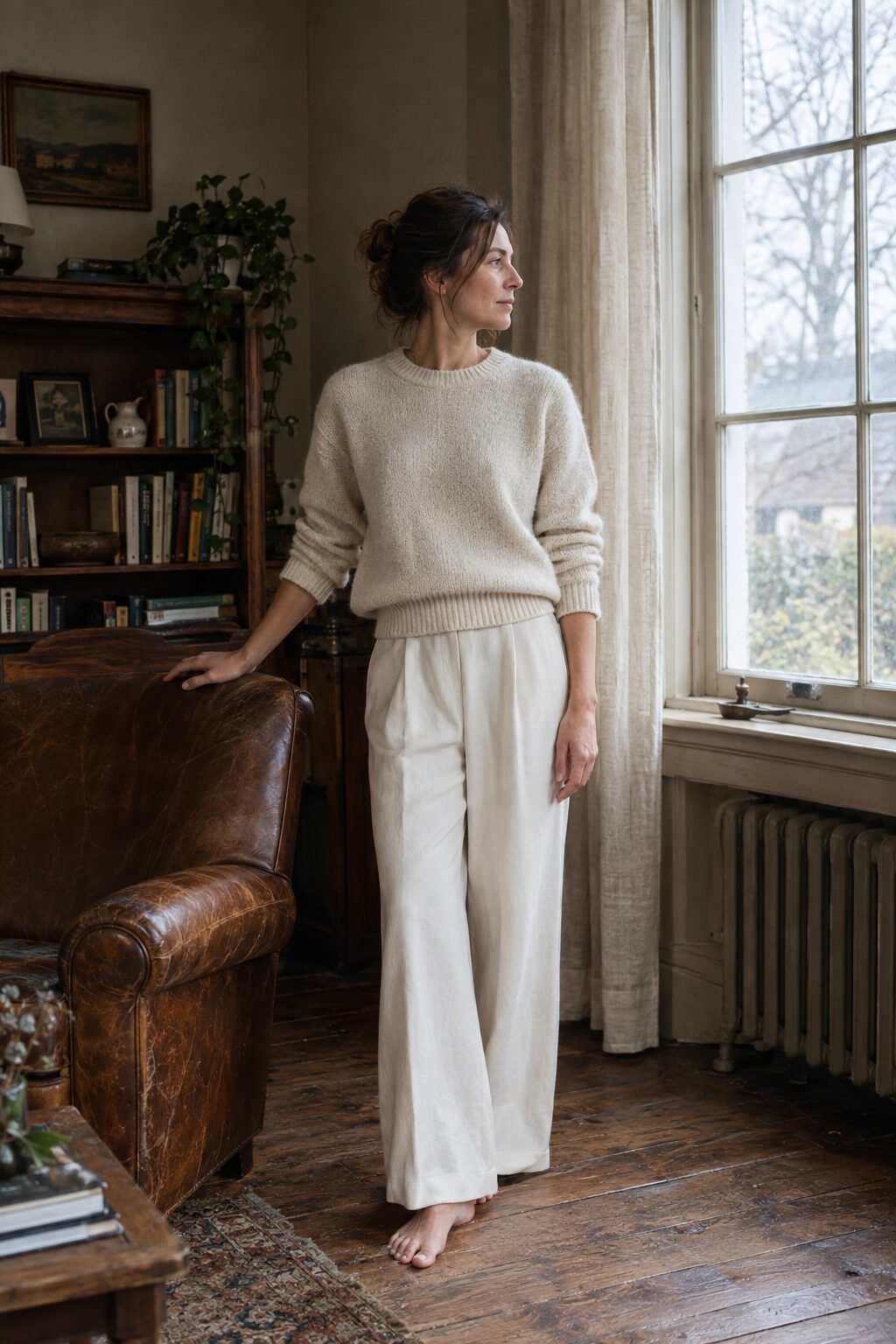
Old money homes are not built for quick resets. They are built to be lived in for decades.
That changes the question you ask. Skip “do I need this right now” and try “would I expect to find this here in five years?”
If the answer is yes, it stays. If it feels temporary, trendy, or oddly specific to a phase, it probably goes.
Timeless rooms are edited slowly, never stripped bare in a weekend.
This is why a one-day purge rarely lasts. You end up making fast decisions about things that deserve a little context.
2. Start With Surfaces, Not Storage
Editor’s Picks
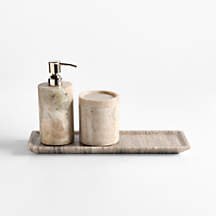
Tuscan Medium Marble Rectangle Tray
$39.95 | Hand-cut beige marble with a honed matte finish, a low tray that gives keys, a candle or a scent bottle one calm home on a console or dresser.
Skip the matching boxes and drawer dividers for now. They feel productive, but they skip the part that actually matters.
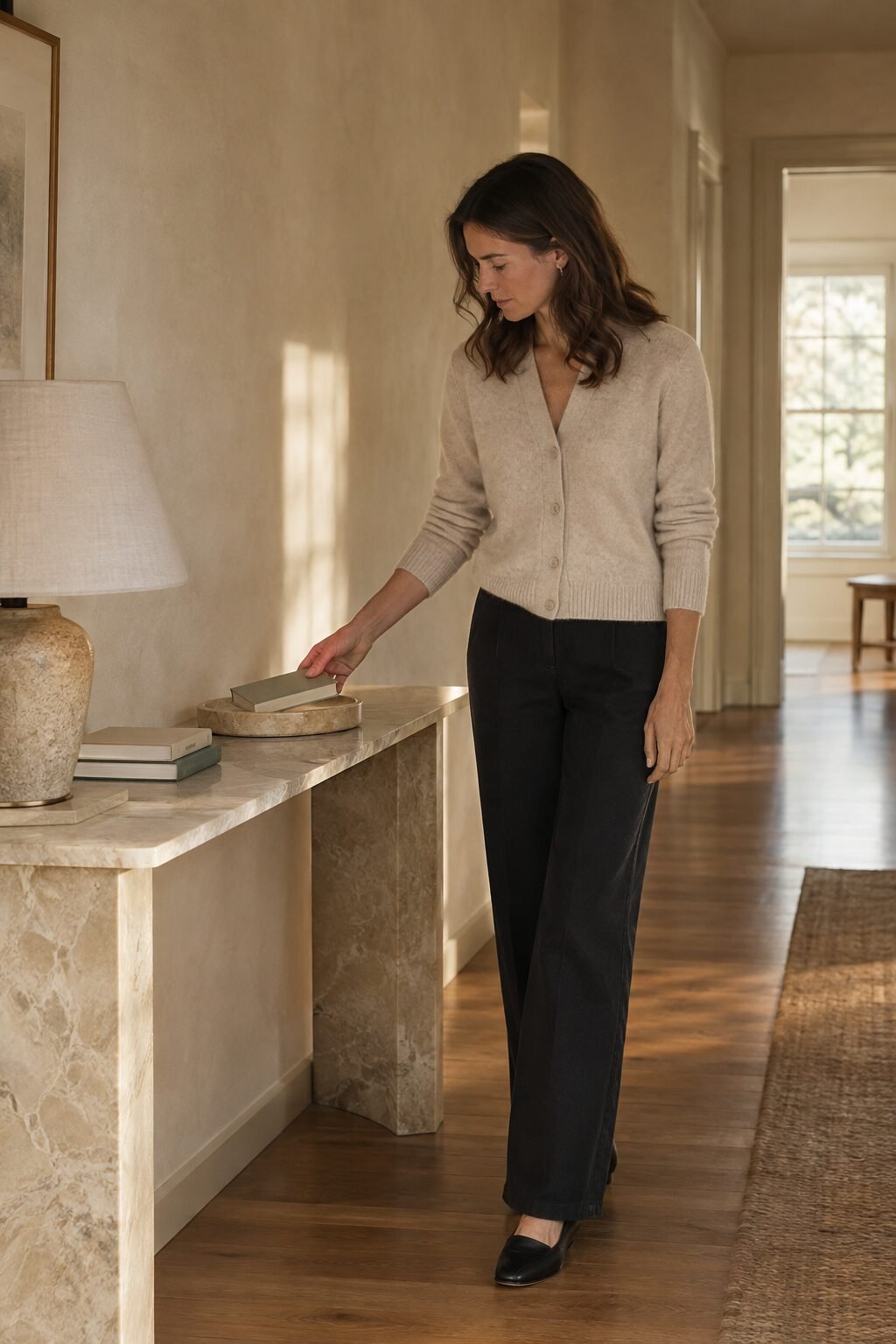
Start with what you see every day: the coffee table, entry console, bedside table, bathroom counter.
Clear one surface completely. Then put back only what earns its spot, usually a lamp, a book, and one small dish.
If something lives on a surface out of habit rather than purpose, it belongs somewhere else, or nowhere at all.
Once your surfaces feel calm, storage becomes obvious. You will know exactly what needs a home.
Styling tip: A low tray is the easiest trick I know. It turns a handful of loose things into one deliberate, quiet arrangement.
3. Edit Your Wardrobe Like You Expect to Wear It for Years
Editor’s Picks
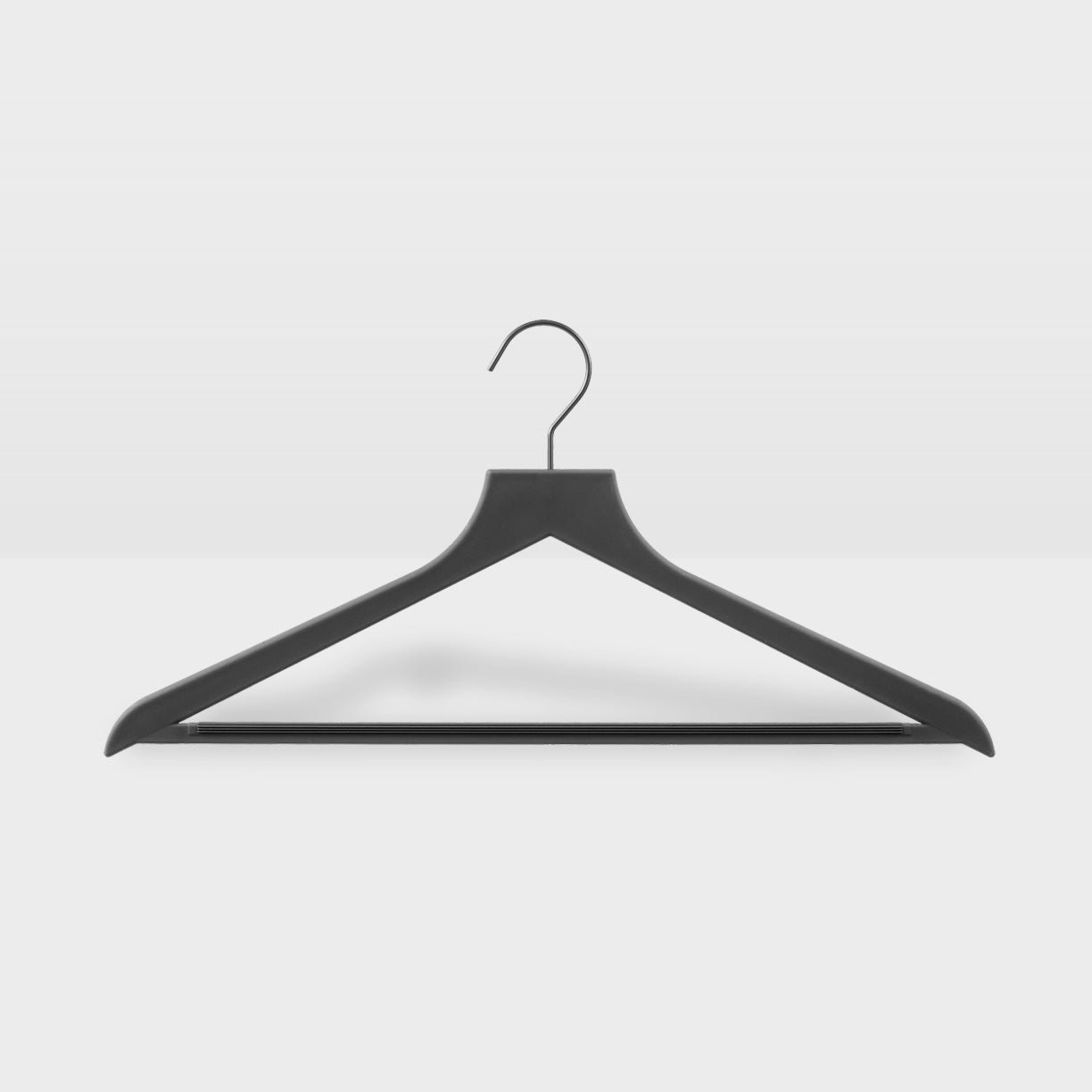
Everyday Hangers (Set of 25, Matte Black)
$40 | A slim, matching set of 25 with a suit-style shoulder and non-slip bar, so a pared-down closet looks uniform and every piece keeps its shape.
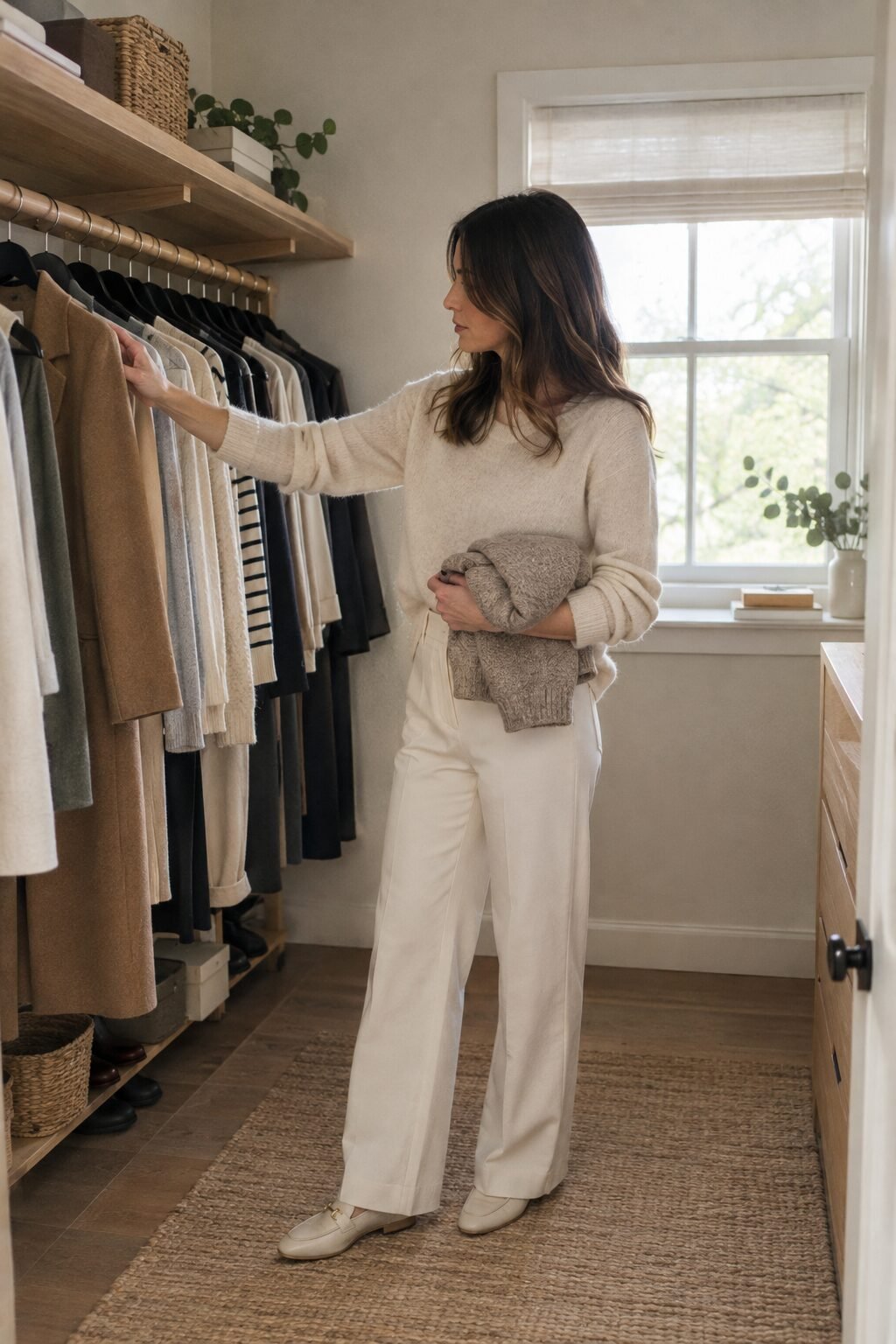
Closets are where decluttering either works or quietly fails. Forget seasonal purges and go by wear patterns instead.
You already know the pieces you reach for again and again: one coat, a few knits, a trusted pair of shoes, a bag that never retires.
Pull out anything that requires convincing. That means the expensive piece you keep out of guilt, and the clothes that fit an old version of you.
What stays should feel familiar, like a blazer that already knows your shoulders.
Then give what stays some room. A matching set of slim hangers makes a small closet look calm without buying a single new thing to wear.
Styling tip: I switched to one uniform set of hangers years ago, and the closet looked twice as tidy overnight. It is the cheapest upgrade in this whole list.
A month of fall outfits, already planned
12 pieces, 30 outfits, one a day. $9, instant PDF
See the 30 Outfits4. Let Go of Duplicates That Serve the Same Role
Editor’s Picks
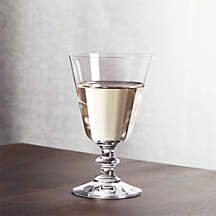
French 10-Oz. Wine Glass
$8.95 | One simple, well-proportioned bistro-style glass instead of a cabinet of mismatched stemware.
Old money homes do not rely on abundance. They rely on quality.
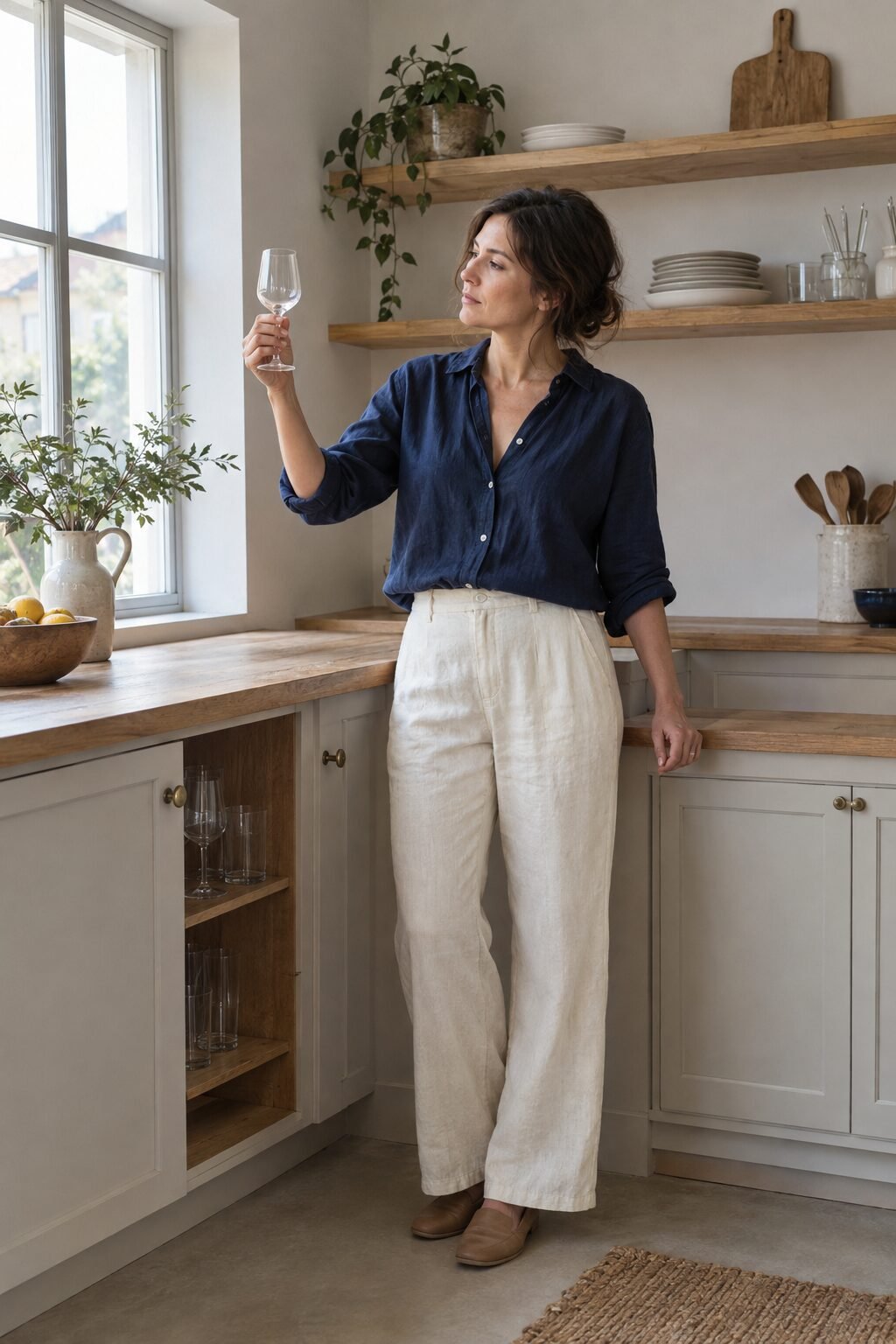
If you own five versions of the same thing, choose the best one. The sweater with the nicest weight, the bag that works with everything, the glass that feels right in your hand.
Duplicates create visual noise, even when they are hidden. They crowd drawers and complicate every small decision.
I once counted eleven mismatched glasses in my cabinet and used the same two every single day.
One good version replaces many average ones. This works for kitchen tools, scarves, and everyday shoes alike.
Styling tip: When I finally cut down to one set of simple glasses, the cabinet looked bigger and setting the table got faster.
5. Declutter Decor That Does Not Age Well
Editor’s Picks
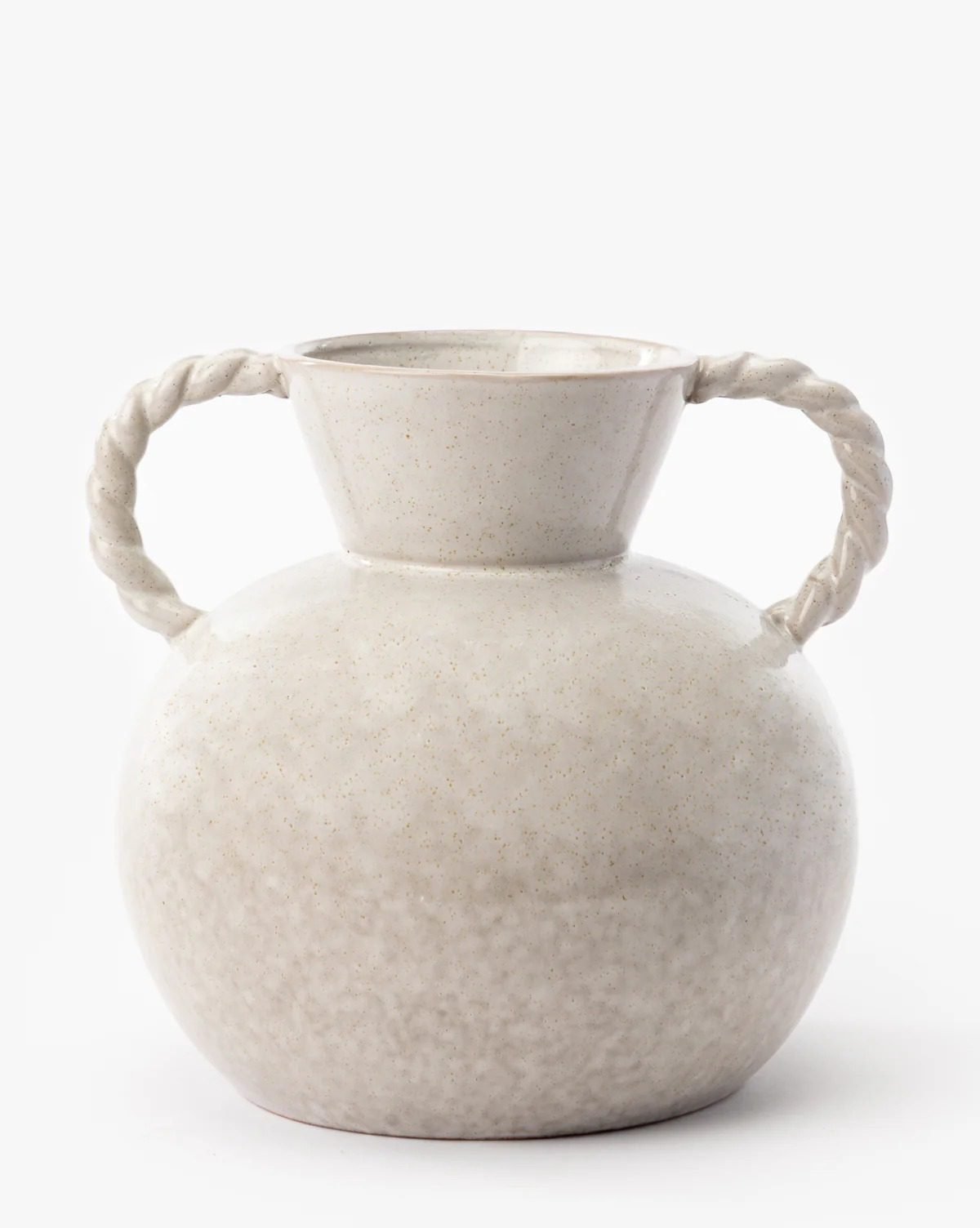
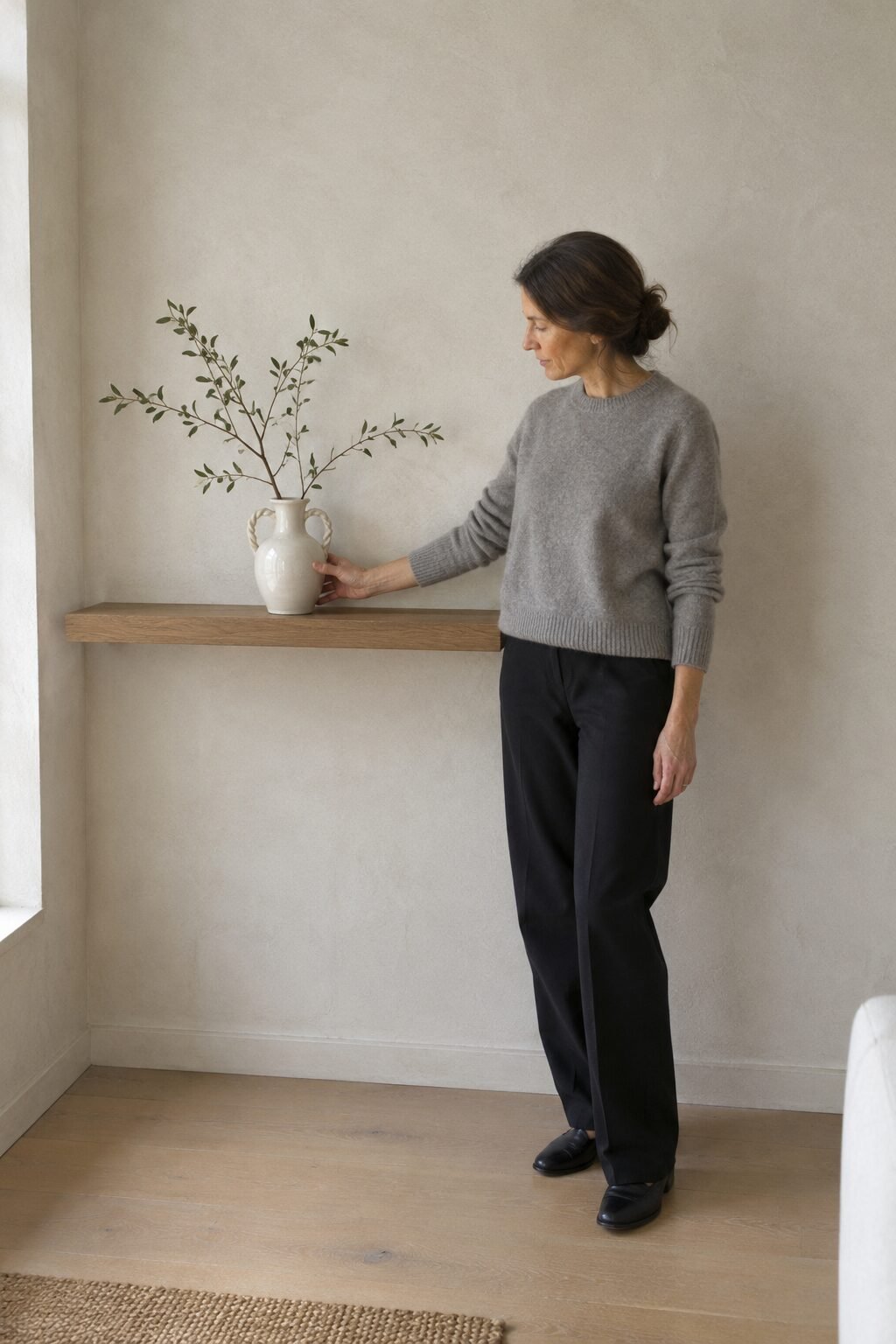
Tyrion Vase
$52 | A cream ceramic vase in a neutral reactive glaze with twisted handles, the one quiet object that can stand in for a shelf of seasonal knickknacks.
Decor should feel like it has always been there, or like it could have been.
If something only works for one season or one mood, it rarely ages well. The pieces that last make sense in any year.
That does not mean your space has to feel formal. It just means choosing quieter personalities: wood, stone, ceramic, linen, and framed art that feels personal rather than decorative.
Suddenly the room feels considered, not arranged.
Styling tip: One good vase does more than a shelf of small objects. Fill it with whatever is in season and let it be the only thing on the shelf.
6. Make Peace With Empty Space
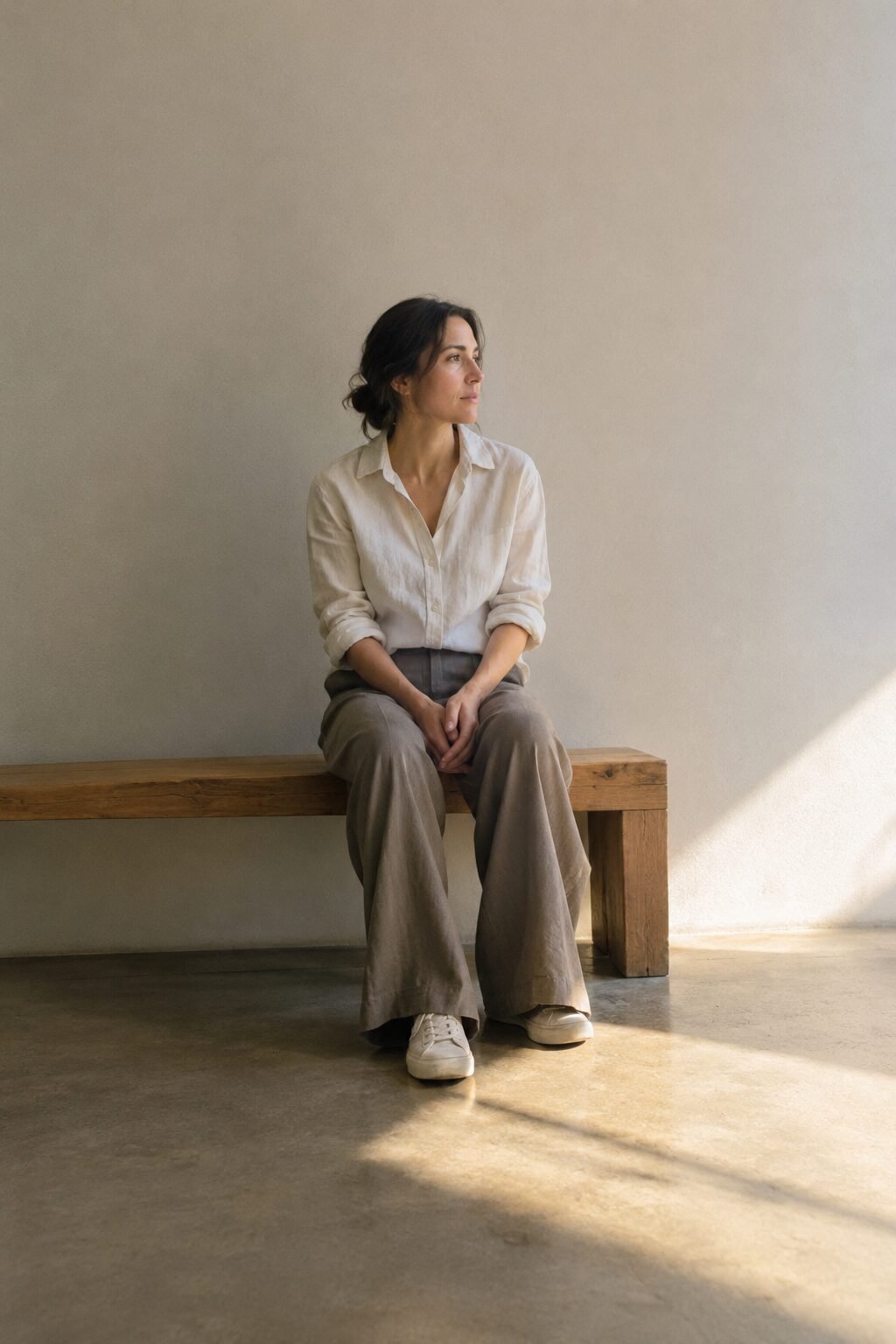
Empty space is not unfinished. It is generous.
Old money interiors leave room on purpose: a shelf that is not fully filled, a corner that holds nothing but light, a hallway wall without art.
That space gives your belongings room to matter. There is a practical side too, because fewer things means cleaning stops being a project.
If you feel tempted to fill every gap, pause and live with it for a while.
Most of the time, you will realize nothing was missing.
7. Declutter Storage With Care, Not Obsession
Editor’s Picks
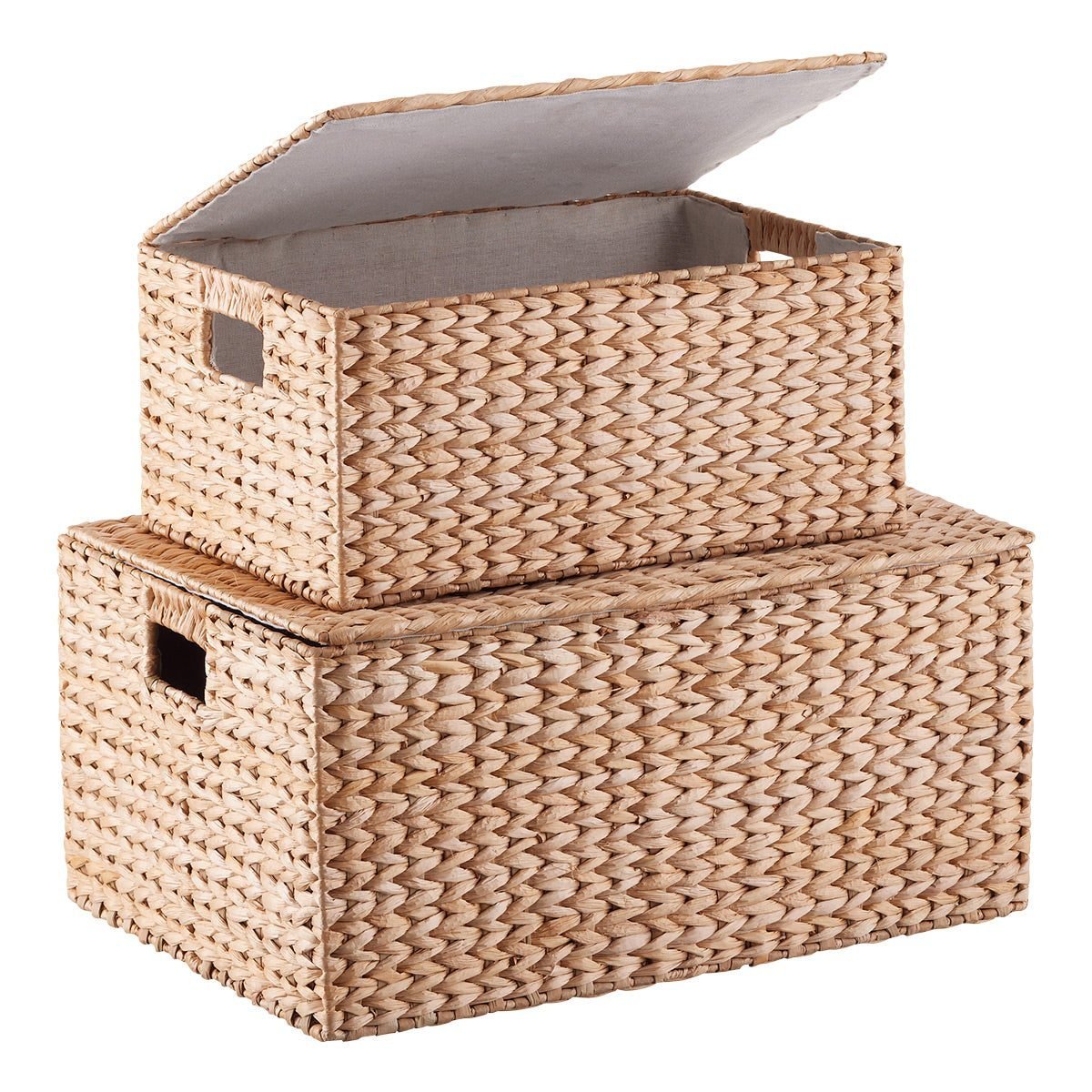
Artisan Rush Hinged-Lid Box
From $20.99 | A natural woven rush basket with a hinged, linen-lined lid, handles on the sides, and room to hide throws, papers or off-season linens.
Storage should protect what you keep, not hide what you regret owning.
Once you have edited your belongings, storage gets simple. Drawers close easily, shelves do not bow, and air can move through the closet.
That is when how you store things starts to matter. Space out the hangers and put shoes away properly instead of piling them.
Decluttering without adjusting storage lets clutter creep back in quietly.
When storage respects your belongings, you naturally keep fewer, better things.
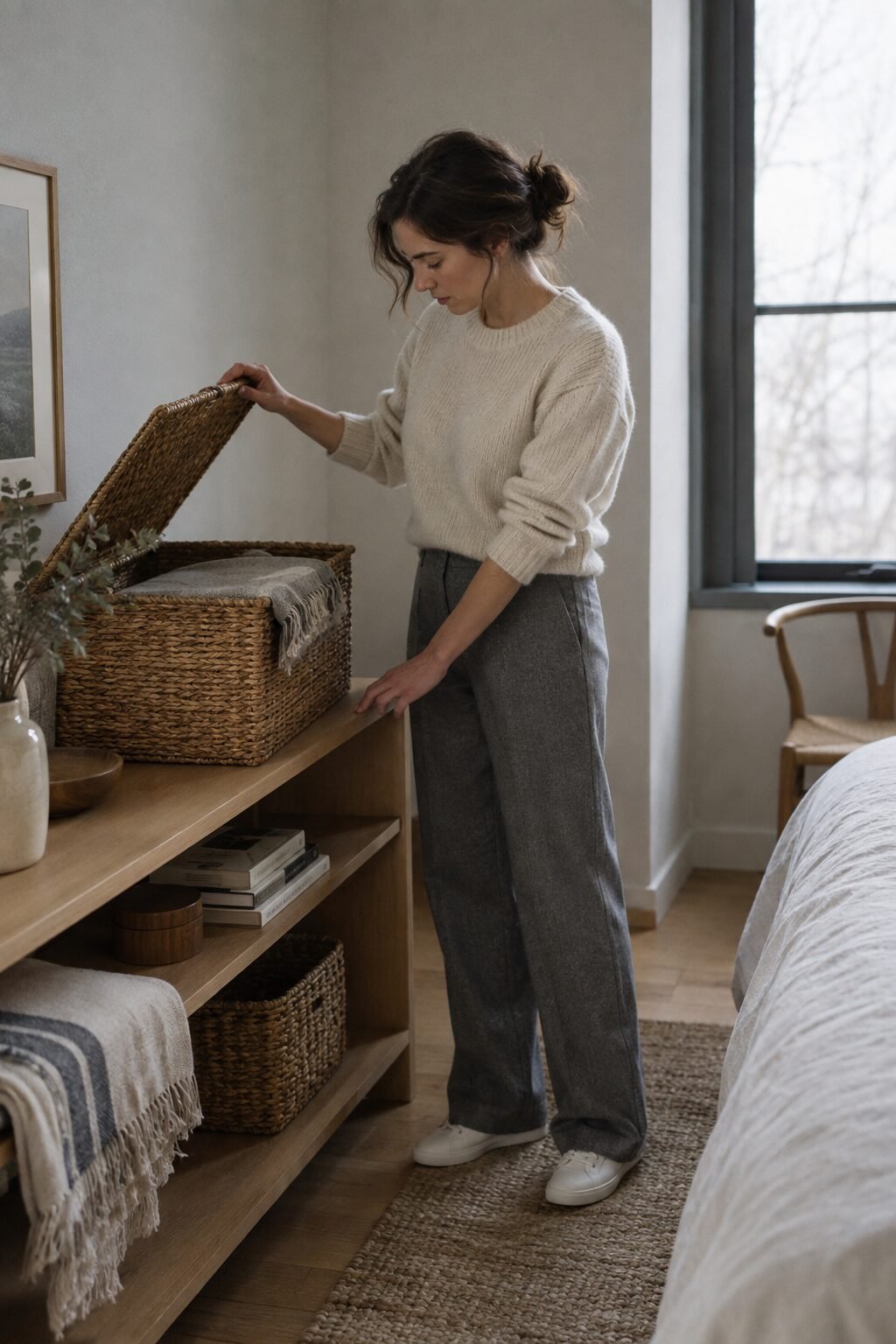
Styling tip: I keep throws and spare linens in a lidded basket like this. It looks like decor, so nothing has to be hidden away.
8. Keep Sentimental Items, Just Not All of Them
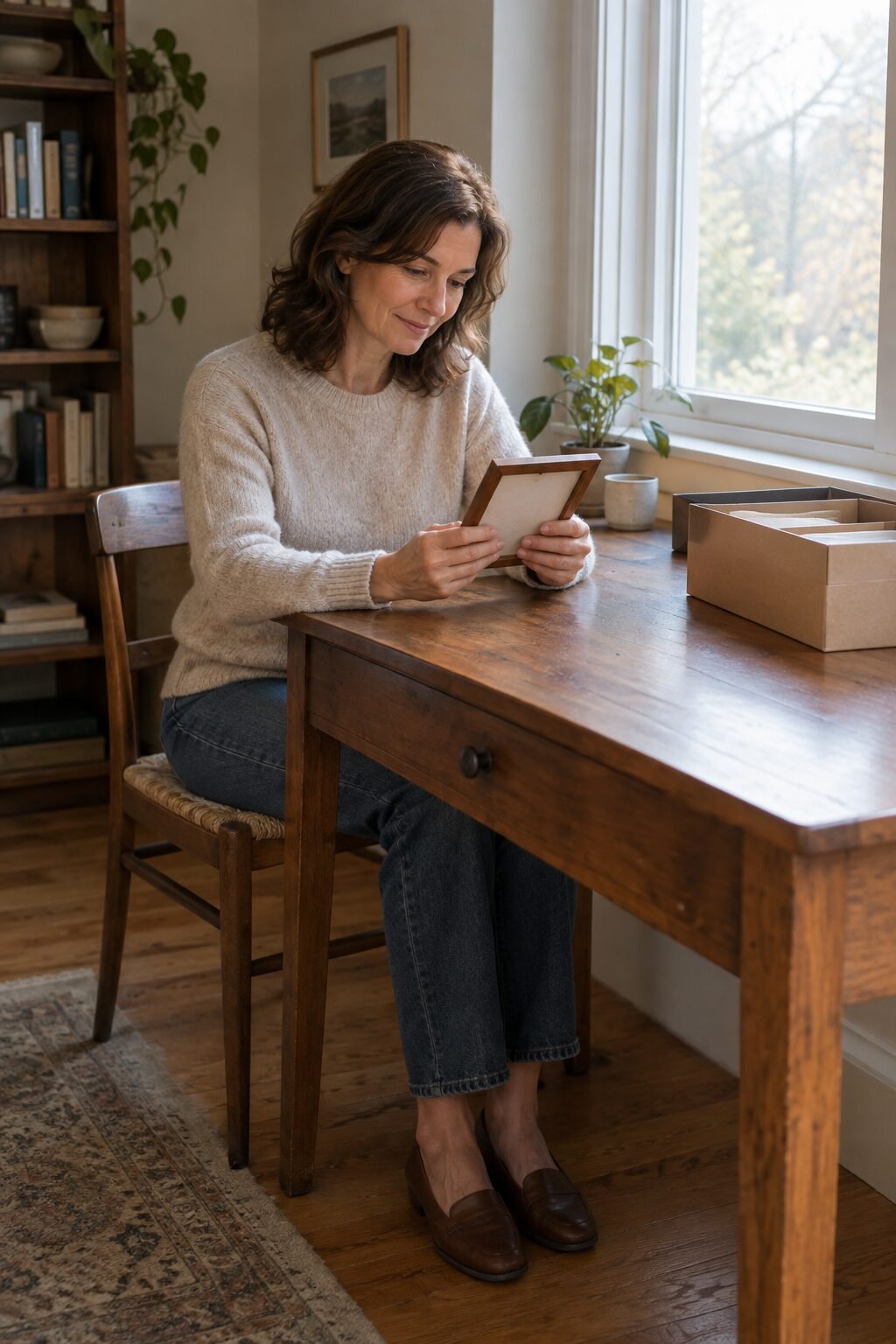
Old money homes are sentimental, just selective. You do not have to get rid of everything with a memory attached.
You simply do not need every version of the same memory. Keep the one that carries it best and release the rest.
A single framed handwritten note beats a box of papers you never open. One serving dish you actually use beats a cabinet you are afraid to touch.
Ask whether you use it or love it, not whether you would feel guilty letting it go.
9. Give the Entryway a Daily Reset
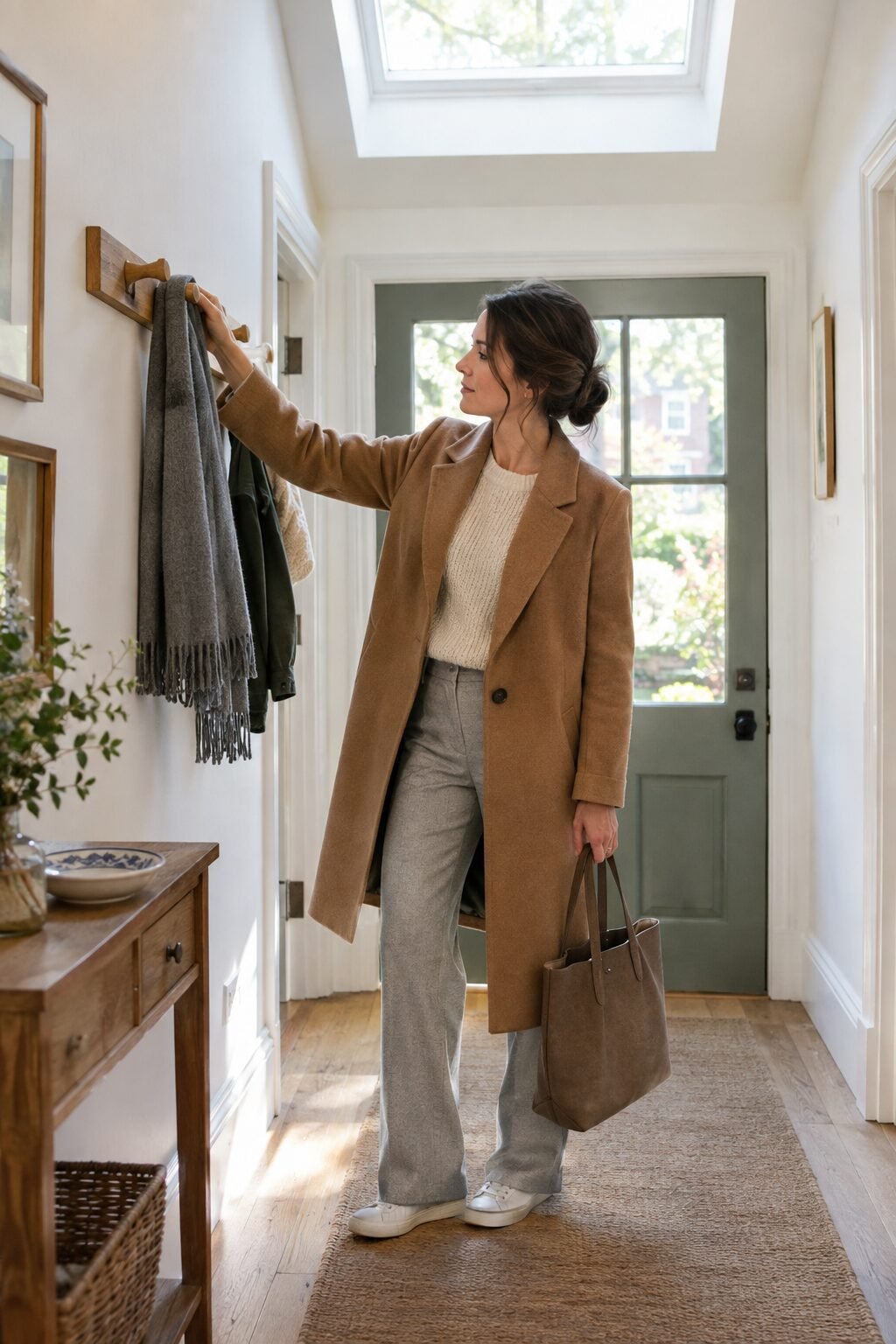
The entryway is where clutter usually begins. Mail, keys, bags, and shoes all land there first.
Give each one a single home: a hook for the coat, a dish for the keys, a spot for the shoes.
Then do a two-minute reset each evening. It takes less time than it sounds and keeps the rest of the house from filling up.
A calm entry sets the tone for the whole home.
10. Follow a One In, One Out Rule
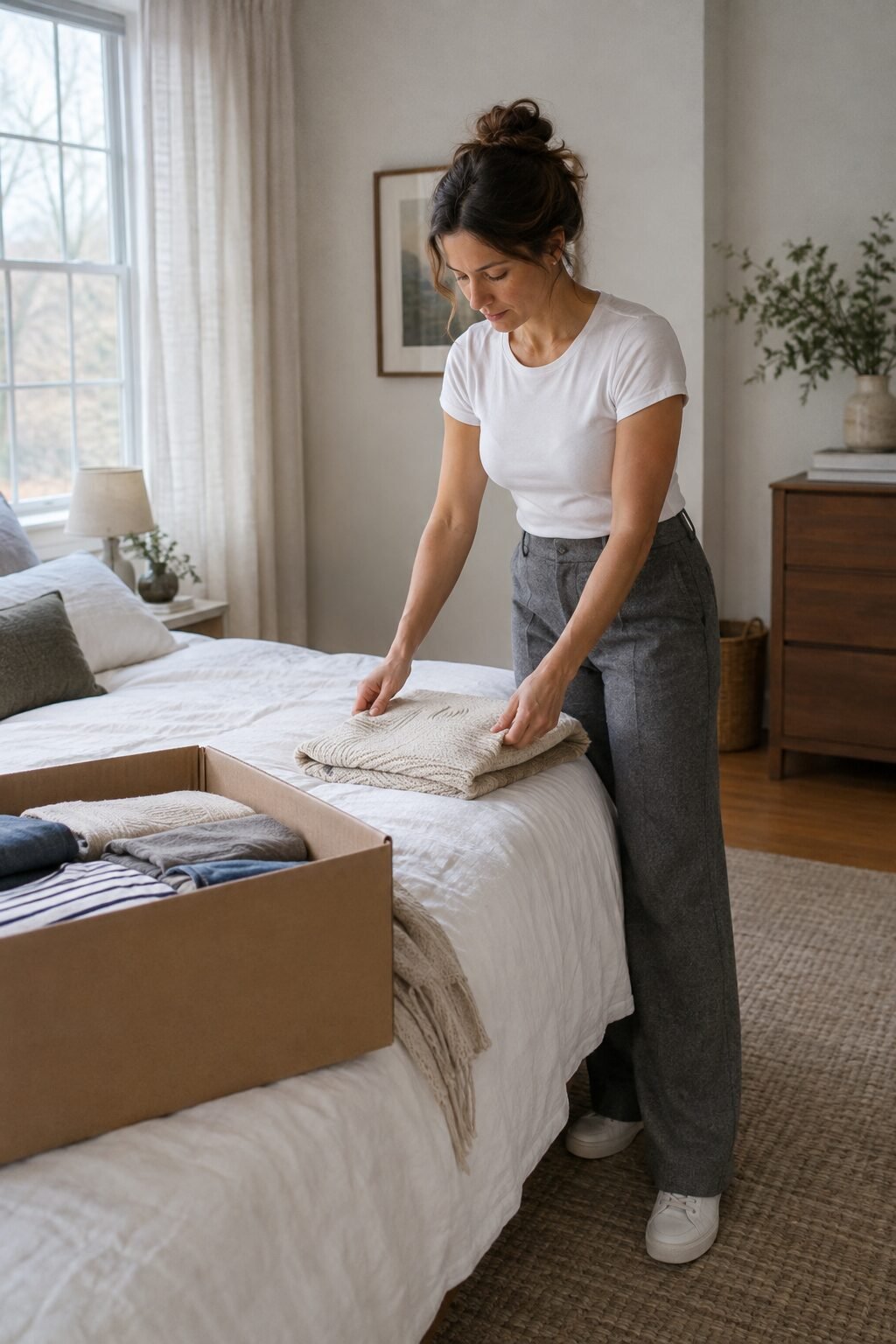
A one-time purge does not last if the same amount keeps coming in.
When something new arrives, something of the same kind leaves. A new sweater means an old one goes to donation.
It sounds strict, but it is really just a habit that keeps your edit permanent. You stop needing big cleanouts at all.
It also makes you a much more careful shopper, which your budget will quietly thank you for.
11. Edit the Kitchen Down to What You Actually Use
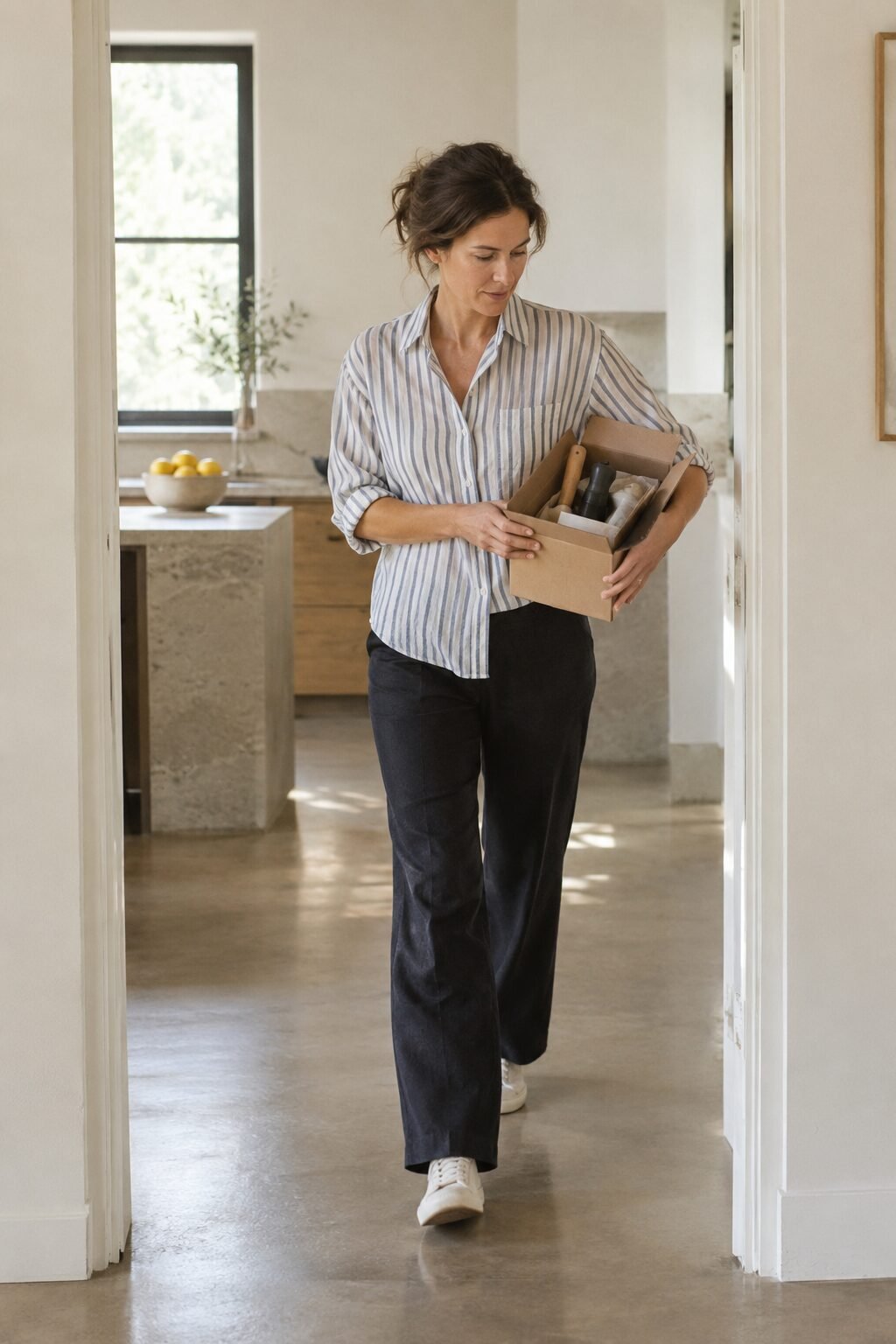
The kitchen collects clutter faster than any other room. Gadgets, mismatched mugs, and half-used pantry items pile up over the years.
Pull everything out of one drawer and only put back what you truly reached for in the last few months.
Keep counters nearly bare, with maybe a cutting board and a bowl of fruit.
The tools you love should be easy to reach, and the rest can go.
Donate the gadget you bought for one recipe and never touched again.
12. Declutter Digitally, Too

Visual clutter is not limited to physical space. Photos, emails, notes, and saved links all create background noise.
Take an afternoon to delete what no longer matters. Organize what you actually reference, and unsubscribe from anything that no longer reflects your taste.
It is a quiet step, but it makes a noticeable difference in how collected your life feels.
Start with the inbox and your phone’s home screen, the two places you see most.
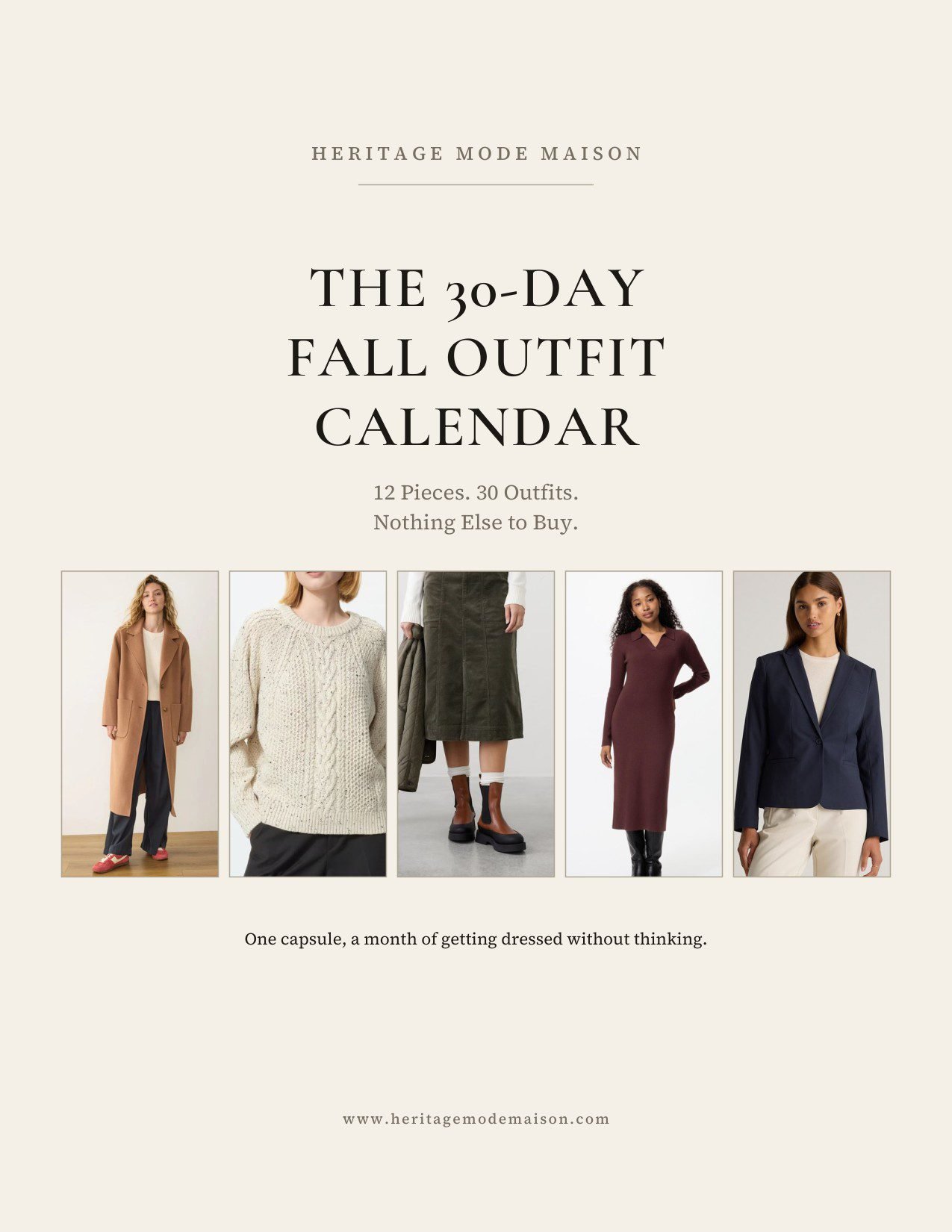
Never Sure What to Wear in the Morning?
The 30-Day Fall Outfit Calendar decides for you: 12 pieces, 30 outfits, one for every day of the month.
$9, instant PDF
See the 30 OutfitsThe goal of decluttering is not perfection. It is flow.
Homes with old money energy never feel paused. There is a book left open, a coat over a chair, and shoes by the door that get worn daily.
Decluttering supports this kind of living because nothing feels fragile or overly precious. Everything has room to exist comfortably.
When you edit this way, your home starts to feel like it knows you. That is always more elegant than anything designed for show.
Frequently Asked Questions
Where should I start when I want to declutter my home?
Start with one everyday surface, like a coffee table or entry console. Clear it fully, then put back only what earns its place.
How do I declutter without getting rid of things I will regret?
Edit slowly and ask whether you would expect to find the item here in five years. Anything you are unsure about can sit in a box for a month before you decide.
Should I buy storage before or after decluttering?
After. Once you have edited, you will know exactly how much storage you need, and you will usually need less than you think.
How do I declutter sentimental items?
Keep the one piece that carries the memory best and let the duplicates go. Display it, so it gets seen instead of stored in a box.
How often should I declutter?
A small daily reset and a one in, one out habit works better than a yearly purge. It keeps the edit permanent.
Save This For Later
Loved ways to declutter? Save this pin to your Pinterest board now so you can find it again anytime you need the inspiration.
Want a fresh outfit idea each morning? Follow Heritage Mode Maison on Instagram.
